Factory Welfare Store Product Selection: What Should Your Staff Shop Sell?
Key takeaways
- There is no ready-made answer to what a factory welfare store should sell. Choose products from shift patterns, break times, site rules and what employees actually buy.
- Group products by role, such as core items, filling snacks, treats, daily essentials and trial items, so shelves stay tidy and expiry checks stay manageable.
- Write down clear rules for adding and removing products, shared by HR, procurement and whoever runs the store.
When a company opens or refreshes its employee welfare store, the first question is usually the same: what should we sell so staff are happy and nothing sits on the shelf? Copying the range of a street-corner convenience store rarely works. A factory minimart serves the same people every day, during short breaks, across night shifts and under site safety rules that ordinary shops never think about. This guide walks through factory welfare store product selection step by step: gathering data, grouping categories, setting criteria, then trialling and removing products. It is written for HR, procurement and anyone who manages a welfare store.
What should a factory welfare store sell? The short answer
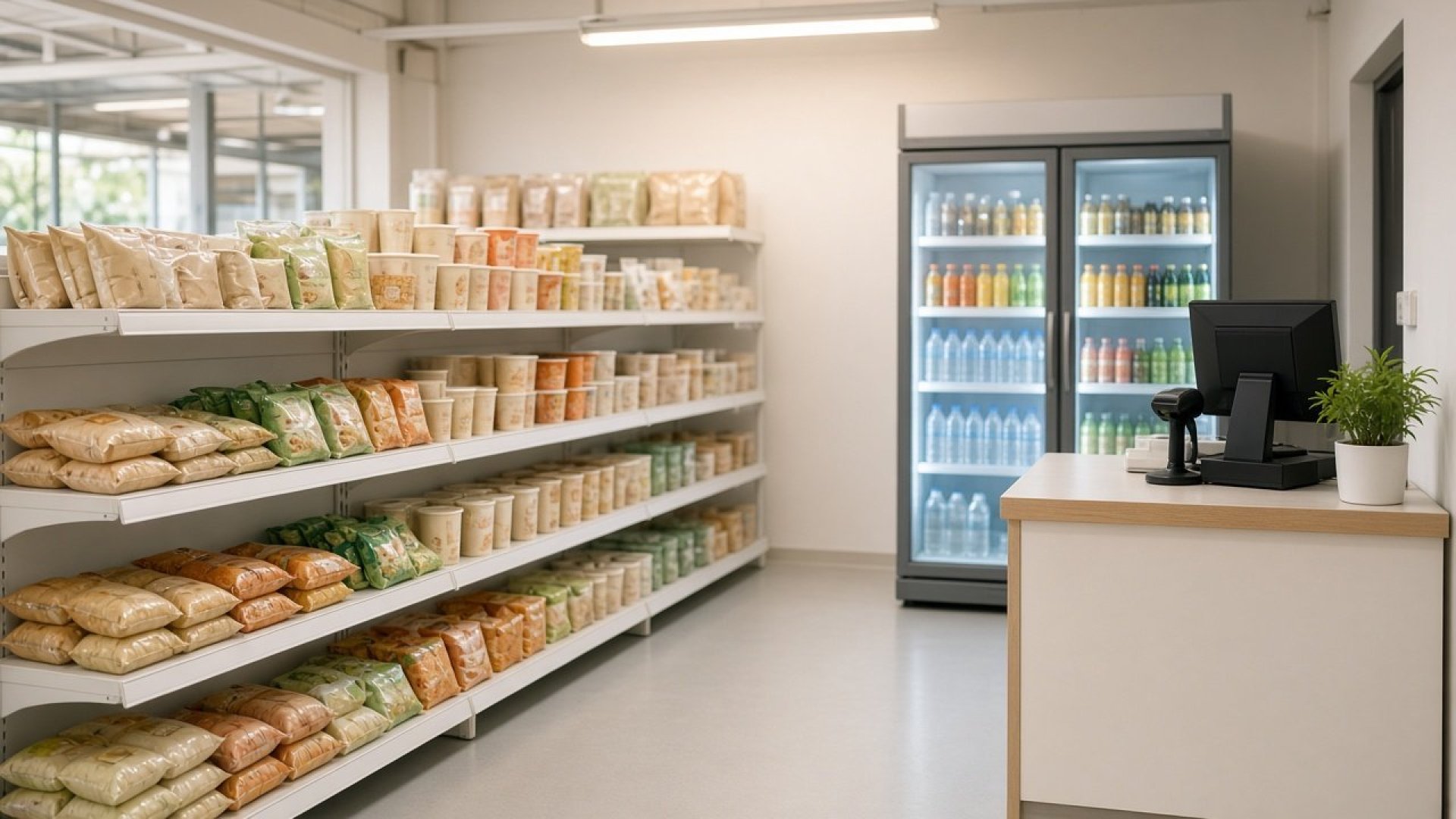
Start with what employees need every day and can grab quickly during a break: drinking water, drinks, filling snacks, treats and personal essentials. Then add or remove items based on real sales and staff feedback. A good staff shop does not need a huge range; it needs the right items at the times people want them, covering both food and drink and the everyday items people use at work.
Why a normal convenience store range does not always fit
Because a factory store sells to the same group of people within limited time, under the rules of the workplace. A high-street convenience store chases variety to attract new customers. A factory welfare store should focus on essentials that are quick to pick up and reliably available on every shift.
- Short buying window: breaks are short, so products that take long to choose or prepare sell poorly.
- Site rules: some areas ban glass containers, strong-smelling food or certain items from production zones. The product list must respect them.
- Welfare role: include options most employees can afford, plus choices for people with dietary restrictions.
For the wider picture of running the shop, see our factory minimart management guide.
What data should you gather before choosing products?
You need the shift and break schedule, site safety rules, shelf and chiller space, what the canteen and pantry already provide, and what employees want.
| What to know | Who to ask | What it decides |
|---|---|---|
| Shift times, breaks and rough headcount per shift | HR or production supervisors | Core items per shift and how much must be ready before each break |
| Site safety and hygiene rules | Safety or facilities team | Which packaging and product types are allowed |
| Shelf space, chillers and back-store space | Store manager | The balance between chilled and ambient products |
| Canteen menu and pantry items | Canteen manager and HR | Avoiding overlap with what the company already provides |
| Employee needs and dietary restrictions | A short survey or feedback box | Items to add, and halal or vegetarian options |
To plan a store that copes with shift-change crowds, read our guide to factory minimart store layout.
How should you group product categories so shelves stay tidy?
Give each category a clear role: what must always be in stock, what is supporting, and what is on trial. The store team then knows which items must never run out and which can go when space is tight.
| Category | Role | Examples | Points to consider |
|---|---|---|---|
| Core items | Always available on every shift | Drinking water, cold drinks, ready-to-drink coffee and tea | Enough chiller space for the busiest break |
| Filling snacks | For people who missed a main meal or work nights | Bread, milk, yoghurt, chilled rice boxes or sandwiches | Short shelf life; control chilling and expiry dates |
| Treats | Add-on purchases during breaks | Crisps, biscuits, sweets | Easy-to-grab sizes; no need for many flavours of one brand |
| Daily essentials | Solve small problems during the day | Tissues, toothbrushes, toothpaste, sanitary pads, socks, raincoats | Slow sellers but must not be missing; small stock is enough |
| Trial or seasonal items | Test new demand | New drink flavours, umbrellas in the rainy season | Set the trial period and success measures in advance |
A word of caution: personal protective equipment for work is generally something the employer provides. Do not sell it in a way that makes staff think they must buy their own; agree this with the safety team first.
What criteria should a product meet before it reaches the shelf?
Every item should pass the same checks: real demand, complete labelling, shelf life, storage needs and fit with site rules.
- Real demand: backed by sales, staff requests or survey results, not just because a supplier offered it.
- Complete labels: food products should carry Thai-language labels and the information required by the Thai Food and Drug Administration, with a clearly readable expiry date.
- Shelf life matches sales speed: short-life items should be fast sellers. If they sell slowly, choose smaller packs or order smaller amounts more often.
- Storage as the label says: if an item needs chilling and the chiller is full, drop something else first. Never leave chilled items outside the chiller.
- Fits site rules: packaging that does not break easily, without crumbs or smells that clash with production-area rules.
- Range of choice: for example lower-sugar drinks, snacks with allergen information on the label, and halal-marked products for staff who need them.
Food choices should match the canteen too. See our healthy staff canteen menu guide and halal, vegetarian and special diets in the staff canteen.
How should night-shift products differ from day-shift products?
Night-shift ranges should focus on light filling snacks, drinks and essentials for people working long hours, especially when the canteen is not fully open.
- Add chilled ready-to-eat snacks for the hours when the canteen is closed.
- Place no-caffeine drinks next to ready-to-drink coffee so staff can choose for themselves.
- Remove slow night-shift sellers so a smaller night team can restock and check expiry dates in time.
For stock levels and restocking at shift change, read managing factory welfare store stock by shift, and for night-shift meals overall, see meal welfare for factory shift workers.
Which products need extra care or should not be sold?
Products under special legal control, items that break site rules, and items with incomplete labels should always be checked first, or not stocked at all.
- Legally controlled products: alcohol, tobacco products and medicines have specific sales laws. Check with the relevant authorities and your company policy before deciding.
- Items against site rules: such as glass containers where they are banned.
- Incomplete labels or damaged packaging: reject them at goods receipt. See our guide to canteen ingredient receiving inspection.
How do you coordinate the range with the canteen, pantry and vending machines?
Give each channel a different job: the canteen covers main meals, the pantry covers what the company provides, the welfare store covers what employees choose to buy, and vending machines fill gaps in places or hours when the store is closed. Items that duplicate what the pantry already offers rarely sell.
Review all channels together, for example when the canteen menu or shift pattern changes. Read more about office pantry management and vending machines in factories.
How do you trial new products and remove slow sellers?
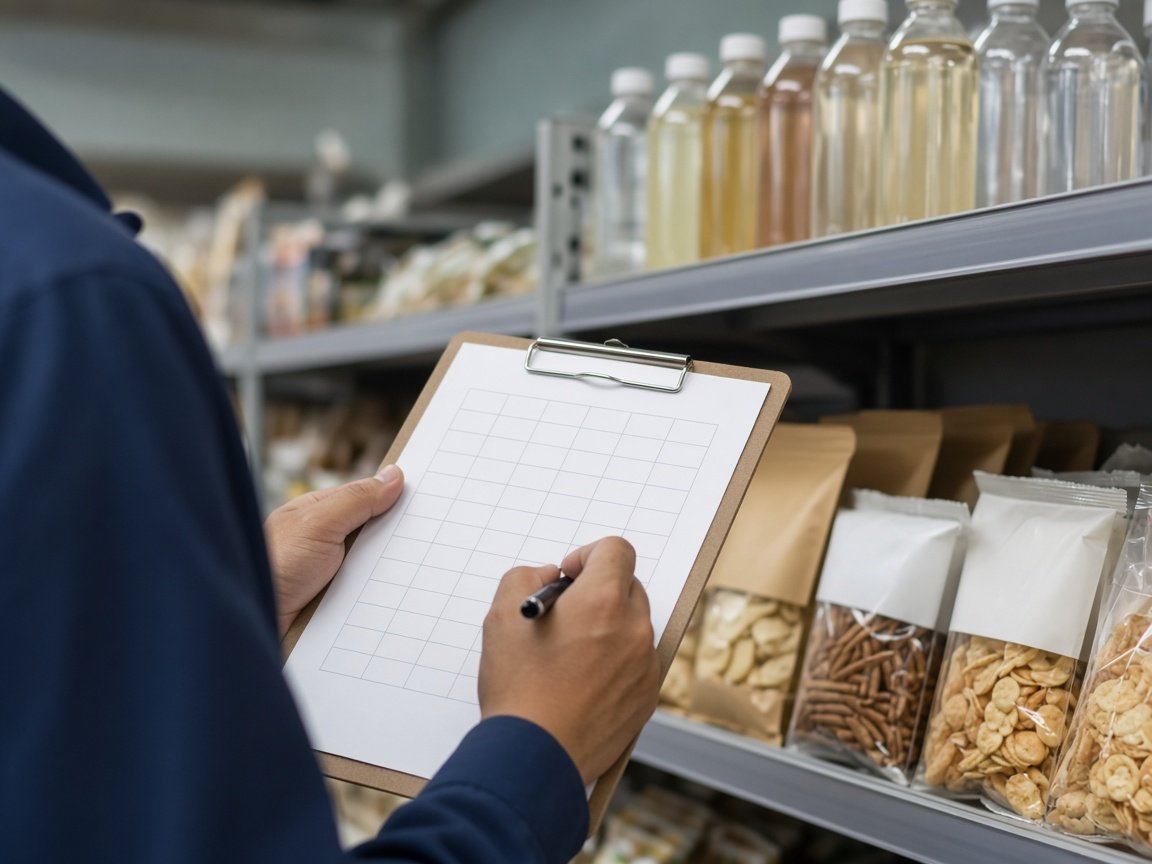
Agree on a regular range review. Trial new items for a short period with clear measures, and consider removing items that sell slowly, often near expiry, or draw repeated complaints.
Steps to trial a new product
- Collect product requests through one channel, screen them with the same criteria, and trial only a few at a time.
- Set the trial period and what you will measure, such as sales against the same category and waste.
- Review the results and decide whether to keep, resize or remove the item.
Signs a product should go
- Sells more slowly than others in its category over several reviews
- Often has to be pulled because it is close to expiry
- Repeated complaints about quality or packaging
If you remove an item people buy regularly, tell them in advance and suggest a replacement.
What should HR and procurement ask the store operator about the range?
Whether you run the welfare store yourself or hire an outside operator, agree the product range clearly from the start.
- Which core items must never run out, and what happens when they do?
- Who approves new products, and against which criteria?
- How often is the range reviewed, and what reports can the company see?
- What lower-sugar, halal or vegetarian options are available?
If you are writing requirements to select a store operator, see our factory welfare store operator TOR checklist.
Frequently asked questions
What should a newly opened factory welfare store sell first?
Start with core items every shift needs: drinking water, drinks, filling snacks and a small stock of essentials. Track real sales for a while before adding more, so nothing sits on the shelf from day one.
How many products should a welfare store carry?
There is no fixed number. Base it on shelf and chiller space and how many people can check expiry dates in time. A small range that never runs out is usually easier to manage than a large one with frequent gaps.
Who should decide the product range?
HR, procurement, the safety team and the store manager should decide together, using written selection criteria and regular staff feedback.
How can TJ FAVOR GROUP help?
This article is general planning guidance. If your organisation would like to discuss planning a canteen alongside a welfare store, the TJ FAVOR GROUP team is happy to listen and give initial advice based on your site.
Talk to TJ FAVOR GROUP about your canteen and welfare store
TJ FAVOR GROUP is a Bangkok-based canteen management and catering company with more than seven years of experience, no extra service charge and a twenty-four-hour hotline. If you are planning or reviewing a factory welfare store, our team is ready to think it through with you.
- LINE: Chat with TJ FAVOR on LINE (@tjfavor)
- Phone: 063-878-8169 / 087-746-0044 / 096-949-6622
- Website: tjfavor.com
See our canteen management service page (in Thai), about us, or contact the team.