What Is Office Pantry Management? What HR and Procurement Should Review
Key takeaways
- Office pantry management is an operating system for planning, buying, restocking, hygiene accountability, service-level agreements and reporting, not merely having a coffee corner.
- HR should define the welfare goal, who may use the space, dietary needs, how rules are communicated and how feedback is heard.
- Procurement and facility teams should specify restock cadence, out-of-stock response, receiving, invoices, equipment care and pantry usage reports.
- An office pantry is different from a staff canteen that serves main meals and from a factory minimart or welfare shop that sells goods.
When an office wants drinks and snacks that staff can use every day, HR, procurement and facility teams often ask more than where to put the coffee machine. They ask how office pantry management should work so someone owns planning, buying, restocking, cleanliness and reporting. This article is general planning guidance, not legal advice and not procurement advice under any organisation's purchasing rules. The organisation should review its own internal policies. Nothing here describes an internal TJ FAVOR GROUP formula.
What is office pantry management?
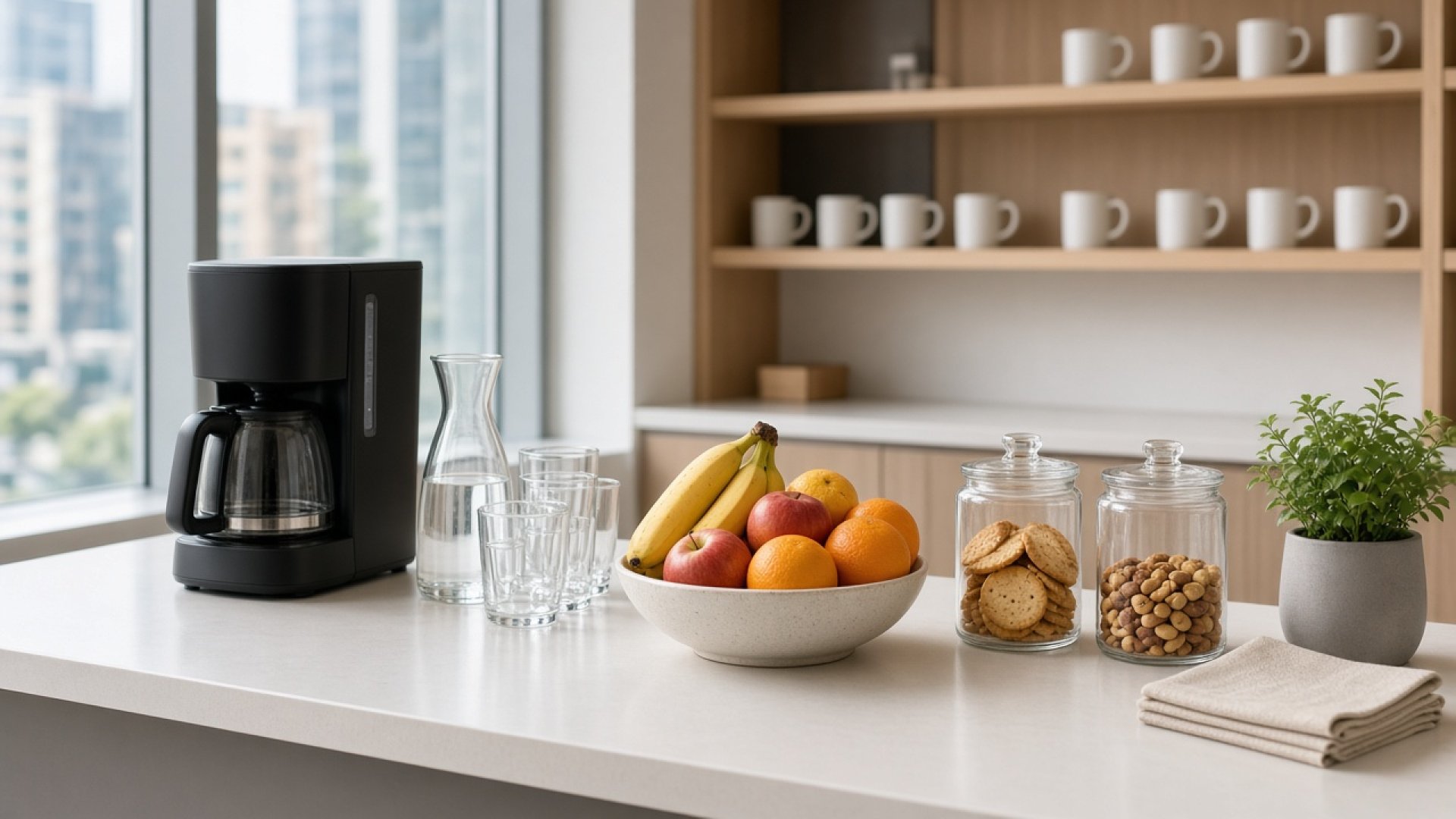
Office pantry management is the system that gives a workplace drink-and-snack area a named owner, a buying plan, a restock cycle, hygiene accountability, a service-level agreement and reports that can be checked later. The idea sits close to pantry management as an operating practice. An office pantry here means a space where staff can pick up drinks and snacks under a welfare policy, not a kitchen that cooks main meals. A shelf of biscuits is not the same as managing the pantry. Management turns snack buying into ongoing work, with approved categories, stock checks and a person to call when something runs out or a machine fails.
For a service-side explanation of sourcing, restocking and looking after the space, see the office pantry service guide for HR and procurement. This article treats the pantry as a management system that HR, procurement and facility teams should define together.
How does an office pantry differ from a staff canteen and a welfare shop?
A canteen focuses on cooked main meals. A welfare shop or factory minimart focuses on selling goods. An office pantry focuses on drinks and snacks that people can pick up themselves during the day.
- Staff canteen: See the canteen management service page and the canteen outsourcing guide for HR and procurement.
- Welfare shop or factory minimart: See factory minimart management and welfare-store stock by shift.
- Office pantry: It is usually a welfare point rather than a sales counter. The aim is convenience, not retail volume.
- Workplace cafe: It may have made-to-order drinks, which is different from a self-serve shelf. See workplace cafe and coffee-corner management.
Do not ask the pantry to replace a hot main meal, or a welfare shop to replace pantry management.
Where does the pantry sit in soft services and workplace welfare?
A pantry is a food-and-drink task inside soft services, and a welfare benefit that staff notice every day. If restocking does not line up with bin collection or wiping rounds, people will see an empty shelf before they see a report. For the wider picture, read what soft services are in facility management, including the canteen and pantry. HR looks at welfare intent, procurement at scope and invoices, and facility at the room and equipment. All three teams should work from the same documents.
What should HR look at when setting pantry welfare?
HR should define who the pantry is for, what should be communicated and how feedback will be heard. HR does not have to restock the jars, but it should write the intent clearly enough for procurement to use.
- Welfare goal: Drinks between meetings, fewer trips outside during short breaks, or support outside canteen hours.
- Who may use it: Regular staff only, or visitors and contractors as well.
- Dietary needs: Halal or vegetarian options and labels that show common ingredients. This article does not give medical advice.
- Communication: Rules for personal food in the fridge, cup use and how to report broken equipment.
- Satisfaction: Collect short feedback from time to time. See the employee canteen satisfaction survey guide.
- Access: If the site has several floors or several shifts, restock timing should not leave one group without the welfare benefit.
What should procurement and facility specify in scope and the pantry SLA?
Procurement and facility teams should turn welfare intent into a scope of work, a service-level agreement and reports that can be compared.
| Topic | What to specify |
|---|---|
| Restock cadence | How often, at which times and which shifts must be covered |
| Out-of-stock response | How to report a gap, the agreed response time and approved substitutes |
| Receiving | Where goods arrive, who counts them and which papers must be signed |
| Invoices | Lines that follow approved categories and the invoice cycle |
| Equipment care | Who checks the coffee machine and fridge, and who calls a technician |
| Approved categories | Core items, substitutes and items barred by company policy |
| Reporting | Usage, spend, expired or wasted goods and issues raised by staff |
Do not insert ready-made figures at the start. Measure from the real site, such as which items run out repeatedly. For a related way to write food-service scope, see the canteen outsourcing guide for HR and procurement, then adapt the questions to a pantry rather than copying a kitchen scope.
Stock discipline and awareness of expiry and waste
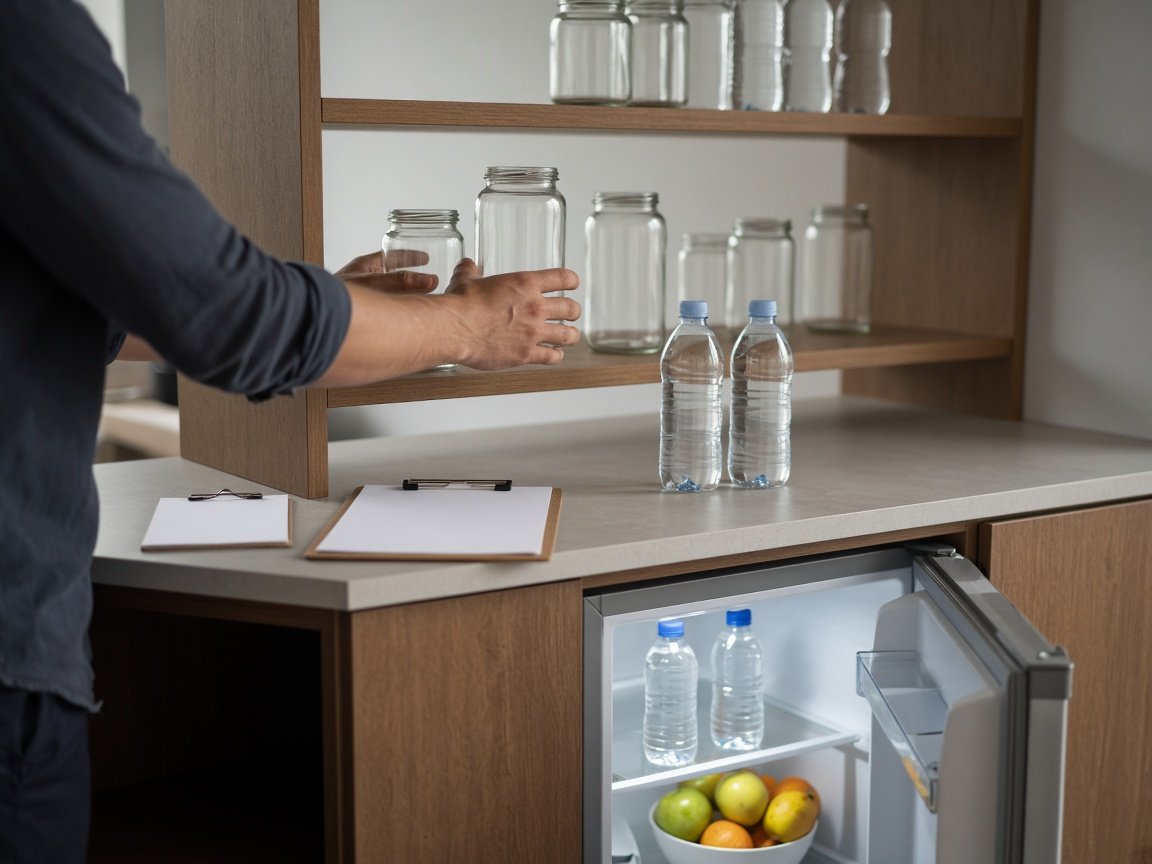
Stock discipline means knowing what sits on the shelf, what is close to expiry and what is used so little that it becomes waste. Goods should rotate first-in, first-out, and someone should remove expired items on a set round. Waste awareness here means watching expired goods, opened items thrown away and damaged packs not a hunt to spend the whole budget each period. See factory canteen food-waste management for a related approach. A full guide to controlling a snack budget so that nothing is left over belongs in a separate review.
Who is accountable for pantry hygiene and safety?
Pantry hygiene is measured by whether it is clear who does each task, not by a sign on the wall.
- Who wipes the counter, the cup point and the drip tray of the coffee machine
- Who checks the fridge and removes expired or unclaimed items
- Who collects used cups and coordinates bag changes with the cleaning team the organisation already uses
- How staff report pests, smells or broken equipment
This article does not mention any quality mark and it does not set a cold-storage figure. Use chilled goods only when someone checks the fridge on a regular round. If nobody checks it, keep the range to dry goods and drinks that can sit outside the fridge according to the label. General-area cleaning may belong to another team, so say who owns the counter, the floor and the inside of the fridge.
How does an in-house pantry differ from an outsourced one?
In-house care suits a site that has an internal coordinator who can follow stock, paperwork and cleanliness without long gaps. Outsourcing suits an organisation that wants written rounds and reports without depending on one person. Both models need the same scope. If the work stays in-house, name a backup. If it is outsourced, ask about the site team and cover when someone cannot attend. Welfare policy still belongs to HR.
What questions should procurement ask before choosing a pantry provider?
Questions before choosing a pantry provider should reveal the management system, not only a snack list.
- Which parts of planning, buying, restocking, hygiene and reporting sit inside the scope, and which sit outside it?
- How does the restock round match working shifts, and how is a shortage reported before the next visit?
- How are expiry dates checked and how do goods rotate first-in, first-out?
- Who receives goods and how are invoice lines split?
- Who looks after the coffee machine, the fridge and broken equipment?
- Does the pantry usage report show consumption, spend, expired goods and staff issues?
- Is there a main coordinator and a backup when the usual person cannot attend?
How is pantry management different from buying snacks now and then?
One-off snack buying happens when someone remembers or when the shelf is already empty. Pantry management has a plan, approved categories, a restock cycle and reports that let the list change from real use. The difference is continuity, not how fancy the coffee machine looks. A managed pantry can still run short, but someone is accountable and the report shows whether to withdraw or substitute the item.
Frequently asked questions
How is office pantry management different from having a coffee corner?
A coffee corner is a place where drinks and snacks sit. Management is the system that says who plans, buys, restocks, cleans and reports. If the space has no owner, empty shelves or expired goods have no one to call.
How should HR and procurement share the work?
HR should set the welfare goal, who may use the pantry and any dietary needs. Procurement and facility teams should write the scope, the pantry SLA and the receiving process. Both sides should read the same pantry usage report.
What should a pantry usage report include?
It should show usage, spend for the period, goods removed because they expired or were damaged, and issues raised by staff. The aim is to adjust the list from real behaviour.
Does every site need someone standing in the pantry all day?
Not every site needs a person standing there all day. What should not be missing is an agreed check round, someone to call when goods run out or equipment fails, and a backup.
Does TJ FAVOR GROUP run office pantry management as a service?
The website does not list pantry management as a main service. The services listed are canteen management, staff meals and event catering. If an organisation is planning food welfare and staff rest areas, the team is ready to give initial advice.
A practical checklist for reviewing the office pantry
- Have you written who the pantry is for and who may use it?
- Are approved categories, a buyer, a restock person, an expiry checker and a backup named?
- Does the pantry SLA cover restock cadence, out-of-stock response, receiving and invoices?
- Is there a pantry usage report covering usage, spend, expired goods and complaints?
- Is someone accountable for the counter, fridge, coffee machine and bins?
- Do staff know how to report a problem?
Talk with the team
TJ FAVOR GROUP is a Bangkok-based company with more than seven years of restaurant experience, ten restaurant branches, and services in canteen management, staff meals and event catering. A twenty-four-hour hotline is available. The website does not list office pantry management as a main service. The team can give initial advice. See the canteen management service page, read about us or contact the team.
Call 063-878-8169 / 087-746-0044 / 096-949-6622
LINE @tjfavor


