Canteen Ingredient Receiving Inspection: What to Check Before You Accept a Delivery, a Guide for HR and Procurement

Key takeaways
- Canteen ingredient receiving inspection means checking what a supplier delivers before you sign for it and before it goes into the kitchen, comparing type, quantity, specification, label, expiry date and condition against the purchase order.
- There are seven core checks: documents, quantity and weight, specification, label and expiry date, condition, temperature, and the cleanliness of the vehicle and containers. Anything that fails should be rejected and recorded every time.
- HR and procurement do not need to inspect deliveries themselves, but they should ask for a written procedure, a record that can be reviewed later, and a pre-agreed way to return or replace goods.
When a canteen serves a large number of employees every day, the ingredients delivered each morning are where every meal begins. A structured canteen ingredient receiving inspection is the first gate that helps make sure what goes into the pot matches what was ordered, is fresh and clean, and does not let costs leak away. This guide explains what to check, the order to work in, when to reject goods, and what HR and procurement should agree with a canteen provider. It is general guidance, not legal advice, so please check the rules that apply to your own factory.
What is canteen ingredient receiving inspection, and why should HR and procurement care?
Canteen ingredient receiving inspection is the check of goods a supplier delivers to the receiving point, against the purchase order and agreed criteria, before deciding to accept or reject them. It happens before ingredients go into the fridge, the dry store or the cooking line.
It is not only the head cook's job, because the result reaches both HR and procurement.
- HR: meals cooked from fresh, clean ingredients that match the agreement mean fewer complaints about taste and inconsistency, which employees notice every day.
- Procurement: with a receiving record, delivery notes are easy to match against purchase orders and invoices, which reduces disputes about shortages, off-spec items and substitutions.
What should you check when receiving canteen ingredients?
The basic checks are seven: documents, quantity and weight, specification, label and expiry date, condition, temperature, and the cleanliness of the vehicle and containers. The table below summarises what to look at and what to do when something does not match.
| Check | What to look at | If it does not match |
|---|---|---|
| Documents | The delivery note matches the purchase order in item names, supplier and delivery date | Have the driver correct it before accepting, or note the difference on the delivery note |
| Quantity and weight | Weigh or count the real goods, deducting the weight of the packaging | Accept only what actually arrived and record the shortfall; do not sign for the figure on the note alone |
| Specification and grade | Type, size, grade and brand or origin match what was agreed | Reject, or get approval from the responsible person before accepting a substitute |
| Label and expiry date | The label is clear and enough shelf life remains for the intended use | Reject goods with incomplete labels or too little shelf life by your set criteria |
| Condition, smell, colour | Produce is not bruised or mushy, meat and seafood show no unusual smell or colour change, cans are not swollen or dented | Reject at once, separate the item from accepted goods and take a photo |
| Temperature | Chilled and frozen goods are cold enough by the criteria set by the provider or the relevant authority, and frozen goods show no sign of thawing and refreezing | Reject goods that fail the temperature criteria and record the reading |
| Vehicle and containers | The vehicle is clean and odour-free, crates and bags are clean, and goods are not mixed with contamination risks | Tell the supplier straight away, and do not accept goods in dirty or leaking containers |
Checking goods before service is one part of the daily routine in a canteen. For other daily checks, see the canteen daily food safety checklist.
How do you make the receiving process systematic?
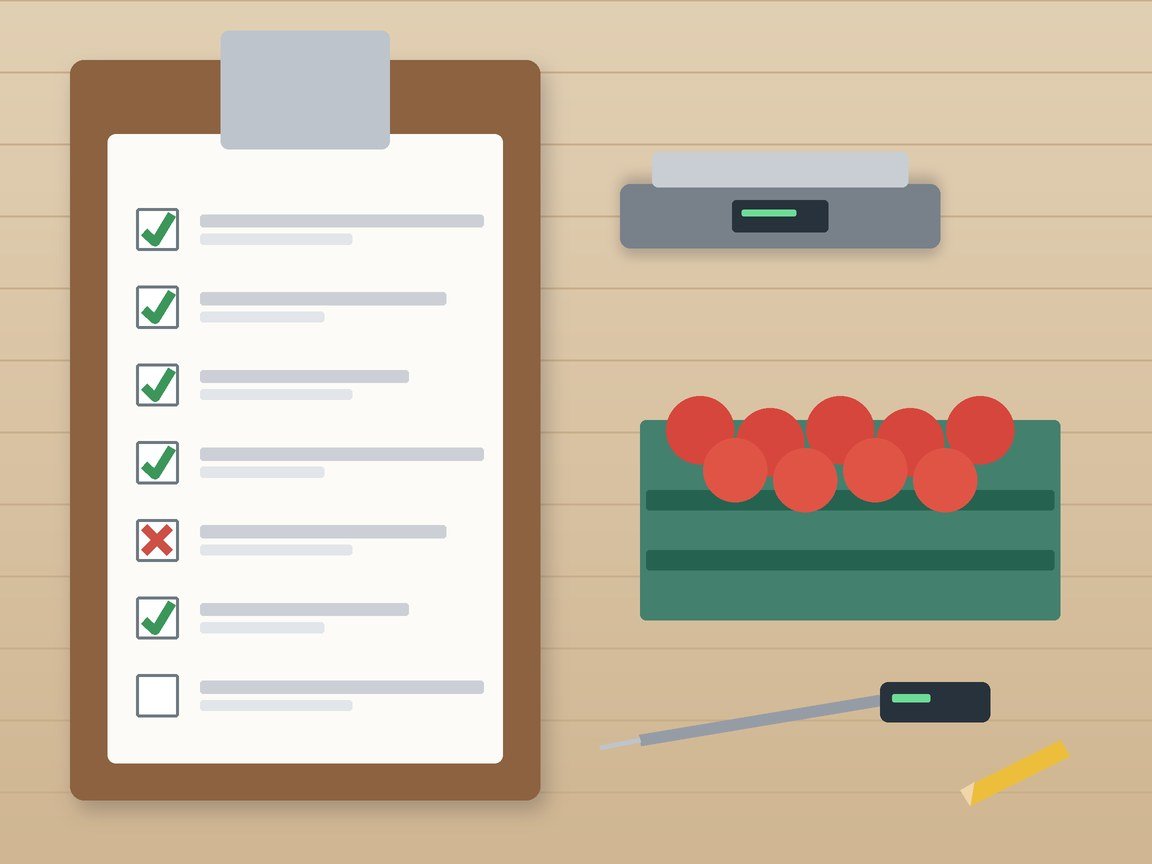
Work in three phases: prepare before delivery, inspect on arrival, and store straight after inspection, using the same order every time and for every person. A repeated order means nothing is missed even when the person on duty changes.
Before the delivery arrives
- Set delivery windows that do not clash with food preparation or the lunch rush, so the inspector has real time to check.
- Prepare the purchase order, scale, thermometer, pen, record sheet and a clean place to put goods.
When the delivery arrives
- Check the vehicle and driver: look at the cleanliness of the vehicle and containers, and confirm the supplier and driver match the booking.
- Match documents: compare the delivery note with the purchase order line by line.
- Weigh and count: check real quantity and weight before signing.
- Check quality: look at condition, smell, colour, label and expiry date, and measure the temperature of chilled items.
- Decide to accept or reject: accept what passes; set aside what fails and tell the driver at once.
- Record the result: note the inspector's name, date, time, result, and anything rejected with the reason.
After inspection
- Move chilled and frozen goods into storage quickly; do not leave them at the receiving point.
- Label with the date received and the expiry date before shelving.
When should you reject ingredients, and how do you record it?
Reject ingredients that miss the specification, have incomplete labels, are expired or too close to expiry by the agreed rule, fail the temperature check, or look unusual enough to raise doubt about safety. Accepting a failed item out of politeness or hurry usually creates bigger problems later, in wasted cost and in risk to employees' meals.
- Write down an "reject at once" list, for example swollen or leaking cans, frozen goods that have thawed and refrozen, meat with an unusual smell or colour, and wet or dirty containers.
- Separate rejected goods from accepted goods immediately and never mix them in.
- Record the reason and the driver's name, and take a photo where possible, to support a replacement or credit request.
- State who may accept, reject and sign, so the inspector never has to decide alone under pressure.
If the canteen finds waste from over-ordering or over-preparing, see the approach in managing food waste in a factory canteen.
How should you store ingredients after inspection so older stock is used first?
Use first in, first out (FIFO): stock received earlier is used earlier, with the received and expiry dates labelled every time and newer stock placed behind. It starts with a receiving check that records dates clearly.
- Label immediately: write the received date and expiry date before putting goods away.
- Separate categories: keep raw and cooked food, meat and seafood, and produce apart, not mixed in one unit without protection.
- Keep special-diet items apart: items for halal or vegetarian employees should have a clear place and label. See more in halal and vegetarian options for staff.
- Check stock on a schedule: set days to review shelves and fridges, remove expired or unusual items and record them.
What should HR and procurement agree with a canteen provider?
Ask the provider for a written receiving procedure, a record you can ask to see, and an agreement on returning or replacing goods. That way HR and procurement can follow progress without standing at the kitchen door.
| Topic to agree | What to specify |
|---|---|
| Procedure and responsibility | Who inspects, who approves substitutes, and what happens when the inspector is absent |
| Records | The format of the receiving record, how often a summary is sent to your organisation, and how long records are kept |
| Rejection criteria | Items rejected at once, and how repeated rejections are reported to the supplier and to you |
| Returns and replacements | Terms for replacement, credit and the time allowed to fix a problem |
| What your organisation can see | Receiving records, rejected items and any change of ingredient supplier |
Procurement teams can add these topics to a request for proposal, following the guide to outsourcing canteen management for HR and procurement, and find more questions in how to choose a canteen caterer.
What mistakes are common in receiving inspections?
Common mistakes are signing before checking, not weighing real goods, keeping no record, and not defining who may reject. A simple, repeatable procedure fixes most of them.
- Signing first and checking later: once the driver has left, correction is much harder. Always inspect before signing.
- Trusting the figure on the delivery note: weigh and count the real goods, especially items priced by weight.
- Recording inconsistently: a record with gaps cannot support a supplier review.
Frequently asked questions about canteen ingredient receiving inspection
Who should carry out ingredient receiving inspection in a canteen?
A trained person with clear responsibility, such as the head cook or an assistant, with a deputy for when they are away. HR and procurement do not need to inspect themselves, but they should ask to see the records and a summary on a regular schedule.
Should ingredients be checked before or after signing for the delivery?
Before signing. If a difference or an unusual item is found, the driver is still there and it can be fixed on the spot. Problems found after the driver has left often turn into disputes that are hard to resolve.
What should we do if ingredients arrive incomplete or off-specification?
Note the difference on the delivery note, set aside the failed items and tell the supplier at once to request a replacement or credit. A substitute should be approved by the responsible person before it is accepted for use.
How can HR tell whether a canteen really inspects incoming ingredients?
Ask to see the receiving records and the list of rejected items, and ask the provider to walk you through the procedure on a site visit. Look for evidence that can be reviewed later, rather than a verbal description alone.
How does TJ FAVOR GROUP inspect incoming ingredients?
This article is general guidance and does not describe the company's internal procedure, which our website does not detail yet. If your organisation is interested in canteen management, our team is happy to discuss your needs and answer questions about kitchen operations directly.
Talk to TJ FAVOR GROUP about canteen management
TJ FAVOR GROUP is a Bangkok-based canteen management and catering company with more than seven years of restaurant experience. If your organisation is considering a canteen service or wants to review its current procedures, our team is ready to listen and offer initial advice.
- LINE: @tjfavor (including the @)
- Phone: 063-878-8169 / 087-746-0044 / 096-949-6622
- Website: tjfavor.com
See the canteen management page, the about us page, or contact the team.