Healthy Canteen Menu: Cutting Sugar, Fat and Salt Staff Still Enjoy
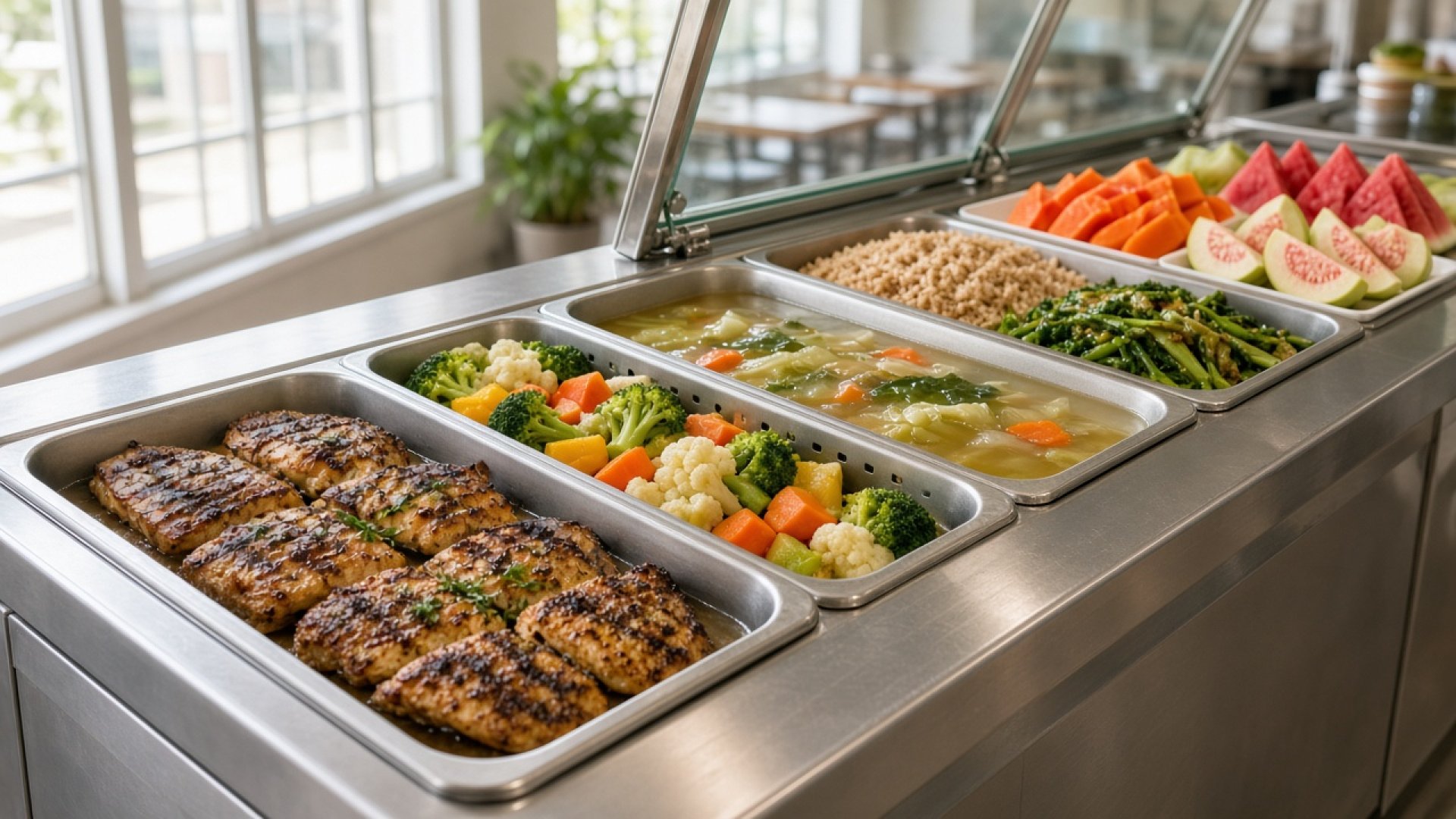
Key takeaways
- A healthy canteen menu that works cuts sugar, fat and salt step by step while staying tasty enough that employees choose it on their own, not a bland line that nobody touches.
- Start with three things the kitchen controls: plate balance, cooking methods, and the amount of sauce and sugar in drinks and desserts.
- Vegetables and fruit must be easy to reach and appealing, and colour-coded menu labels help people decide quickly during a short break.
- Adapt the approach to who is eating, and leave individual health advice to dietitians and doctors.
Many organisations want their canteen to offer better-for-you choices, but the first attempt often brings complaints that the food is bland or not filling. Building a healthy canteen menu that people still want to eat is not just about removing sugar or oil. It means planning flavour, cooking methods, the serving line and communication together. This guide collects practical ways to cut sweet, oily and salty food in staff canteens at factories, hospitals and international schools. It is general food-service information, not medical advice. Where employees or students have specific health needs, they should consult a dietitian or doctor.
What is a healthy canteen menu, and why must it not be bland?
A healthy canteen menu offers more vegetables, less oil, sugar and salt, and lighter cooking methods, while keeping the flavours people already know. If a dish is not tasty, people skip it, and wasted food helps nobody. Change should be gradual so that employees get used to it.
In Thailand, the Department of Health publishes Healthy Canteen guidance and a healthy-menu programme that focus on adding vegetables, reducing sweet, oily and salty food, and choosing boiling, steaming, baking and grilling. Organisations can read the original documents on the Bureau of Nutrition website and adapt them to their own people. If you do not yet have a base menu plan, read our staff menu planning guide alongside this one.
How do you balance the plate without employees feeling short-changed?
Use the healthy-plate idea promoted by the Department of Health: roughly half the plate vegetables, one quarter rice or starch, and one quarter lean meat or other protein, plus fruit that is not overly sweet. The plate looks full because of vegetables, not because of oil.
One caution: energy needs differ from person to person, and the Department of Health itself notes that this proportion may not suit everyone who does heavy physical work. Canteens should let employees add more rice or protein rather than forcing one portion on everybody. Practical serving-line techniques include:
- Placing boiled or blanched vegetables and lightly stir-fried greens at the start of the line, before the fried dishes.
- Offering brown or mixed rice next to white rice, without forcing the switch.
- Using compartment trays or divided plates so the vegetable share is easy to see.

How can cooking methods cut oil and still taste good?
Start by changing how the most popular dishes are cooked: bake, grill or steam instead of deep-frying, and swap coconut-milk curries on some days for sour curry, clear soup or clear tom yum. Employees still get familiar dishes, made with less oil.
| Usual dish | Lighter option | Keeping it tasty |
|---|---|---|
| Fried chicken | Herb-baked or grilled chicken | Marinate with garlic, pepper and lemongrass before baking |
| Fried fish with sauce | Steamed lime fish, or grilled fish with dip on the side | Serve the dip in a small cup so people add their own |
| Oily stir-fry | High-heat stir-fry with little oil, or blanched greens with a light drizzle of oyster sauce | Use a very hot wok and small batches so vegetables stay crisp |
| Coconut curry every day | Rotate sour curry, spicy vegetable soup and clear soup | Use stock made from bones or vegetables so less seasoning powder is needed |
Fried food does not have to disappear completely. Try serving fried dishes less often and in smaller portions, put a baked or grilled option right beside them, and always drain fried items well before they go on the line.
How do you control sauces and condiments so salt really drops?
Salt reduction works when the kitchen lowers salt and sauce in standard recipes step by step and also makes table condiments easier to use sparingly.
- Write a standard recipe for every dish, stating sauce, fish sauce and seasoning powder in spoons per pot, then reduce them gradually.
- Build flavour with herbs, lime, chilli, garlic, shallots and house-made stock instead of relying on salt alone.
- Serve dips and sauces in small side cups rather than pouring them over the plate.
- Keep condiments at one central station instead of on every table.
- Use processed items such as sausages and fish balls as extras, not as the main protein every day.
How do you reduce sugar in drinks and desserts without complaints?
Offer sweetness levels such as regular, less sweet and no sugar, set less sweet as the default, and keep drinking water easy to grab. People who prefer the usual taste can still ask for it.
For desserts, alternate rich coconut sweets with fresh fruit or lightly sweetened soy pudding. In drinks fridges, put water and unsweetened drinks at eye level. The Department of Health also publishes guidance on reformulating drinks to be less sweet that canteen vendors can study.
How do you make vegetables and fruit something people take on their own?
Vegetables need to look fresh and sit where they are easy to reach, and fruit should be cut, ready to eat and chilled. Overcooked vegetables at the end of the line are usually skipped.
- Add more vegetables to dishes people already like, such as fried rice, basil stir-fry, noodle soup and clear soup.
- Choose seasonal fruit such as papaya, watermelon, guava and pineapple, cut into bite-size pieces.
- Control hygiene when washing and cutting produce, following a daily canteen food-safety checklist.
How can menu labels and colour coding help people choose?
Use a simple colour code on menu boards: green for vegetable-rich dishes that are boiled, steamed or grilled, yellow for middle-ground dishes, and orange for fried or rich dishes. Employees can decide quickly during a short break.
Labels should show the cooking method, spice level and ingredients that may cause allergies. Avoid exaggerated wording on labels, such as promising that a dish has an effect on health or body shape. For allergen labels and special diets, see halal, vegetarian and special diets in the staff canteen.
How do factories, hospital staff and international schools differ?
The principle of cutting sugar, fat and salt is the same, but portions, timing and serving format differ by who is eating.
- Factories: many employees do physical work and rotate shifts, so meals must be filling. Let them add rice and lean protein, and offer night-shift dishes that are not too heavy. See shift-worker meal welfare.
- Hospital staff: they work across many hours with unpredictable breaks, so balanced grab-and-go sets and cut fruit should be available throughout the day. Patient meals are a separate matter under the care of dietitians and the medical team. See hospital canteen outsourcing.
- International schools: diners span many ages and cultures, so share menus and possible allergens in advance, offer less-sweet snacks, and let the school set the policy with qualified specialists. See international school canteen outsourcing.
Example of a one-week healthy menu rotation
This example is an idea for the main serving line, not a fixed standard menu. Every day should include a green-label dish next to a popular favourite.
| Day | Lighter main | Vegetables and soup | Dessert or fruit |
|---|---|---|---|
| Monday | Steamed lime fish | Mixed vegetables with little oil, tofu clear soup | Papaya |
| Tuesday | Herb-baked chicken | Sour vegetable curry, blanched vegetables with chilli dip | Watermelon |
| Wednesday | Lean grilled pork with dip on the side | Glass-noodle salad with plenty of vegetables, cabbage clear soup | Mung bean dessert, less sweet |
| Thursday | Basil chicken stir-fry with long beans | Spicy mixed vegetable soup | Guava |
| Friday | Poached chicken rice with clear soup | Broccoli and mushroom stir-fry | Pineapple |
Adjust for seasonal produce and employee feedback. If a dish comes back largely uneaten, find the reason and fix it. See factory canteen food waste management for tracking methods.
Myths and facts about healthy canteen food
- Myth: healthy food has to be bland. Fact: herbs, sourness and good stock keep flavour clear with less salt.
- Myth: a canteen menu can solve an individual's health problem. Fact: the canteen makes better choices easier to find, but personal health questions belong with a doctor or dietitian.
Checklist for starting a less sweet, oily and salty canteen menu
- Write standard recipes and reduce sugar, oil and salt step by step.
- Offer at least one green-label dish every day and place it where people see it first.
- Provide blanched or fresh vegetables and ready-to-eat fruit at every meal.
- Make less sweet the default for drinks and keep water easy to grab.
- Collect employee feedback regularly through an employee canteen satisfaction survey.
- Consult a dietitian when planning for groups with special needs.
- If you are opening a new canteen, build this approach into the plan from the start; see our new staff canteen opening guide.
Frequently asked questions
Where should a healthy canteen menu start?
Start with dishes that already sell well, change how they are cooked and reduce sauces step by step, and add one green-label dish every day. Employees then do not feel that everything changed at once.
Will employees complain that food is bland after cutting sugar, fat and salt?
Sudden cuts usually draw complaints, so reduce gradually and make up for it with herbs, sourness and house-made stock. Offering a choice of sweetness levels for drinks also helps.
How should a factory canteen with physically active workers plan healthy menus?
The same principles of more vegetables and less oil apply, but let workers add rice and lean protein because energy needs differ from person to person. Make sure drinking water is easy to get on every shift.
How can TJ FAVOR GROUP help with a healthy canteen menu?
TJ FAVOR GROUP provides canteen management and staff meal services, and the team is happy to discuss a less sweet, oily and salty menu that suits your organisation. For individual health matters, please consult a dietitian or doctor.
Contact the team
TJ FAVOR GROUP is a Bangkok-based company with more than seven years of food-service experience, providing canteen management, staff meals and event catering, with no extra service charge and a twenty-four-hour hotline. If you are planning healthier options for your staff canteen, visit our canteen management service page, read about us or contact the team.
Call 063-878-8169 / 087-746-0044 / 096-949-6622
Chat with TJ Favor on LINE @tjfavor