Workplace Cafe Management: How to Run a Staff Cafe or Coffee Corner, a Guide for HR, Procurement and Facility Teams
Key takeaways
- Workplace cafe management starts by agreeing the scope clearly: a staffed cafe or a self-service coffee corner, who uses it, when, and who looks after what, before choosing a machine or a menu.
- The daily work runs in a cycle: prepare to open, serve, reset after the peak, and close and clean, with the milk-contact parts and the machine handled as the manufacturer's manual says.
- A short menu and early preparation help to cut queues, and the agreement with a provider should say who supplies the machine, ingredients and people, and who maintains and cleans.
An overflowing drip tray, an error message nobody clears and the smell of sour milk across the floor are familiar sights to many facility and HR teams. The problem is rarely the coffee beans. It is that nobody owns the daily work. Workplace cafe management is therefore about people, time, cleanliness and restocking, not only about buying a machine. This guide is for HR, procurement and facility teams in factories, offices and international schools. It is general guidance; for how a real machine is used and cleaned, follow the manufacturer's manual.
How does a workplace cafe differ from a self-service coffee corner?
A workplace cafe has staff who make the drinks, a counter and clear opening hours, while a self-service coffee corner lets users press a button or brew their own. Both need a named owner, otherwise restocking and cleaning belong to no one.
| Point | Staffed cafe | Self-service coffee corner |
|---|---|---|
| Who makes the drinks | Cafe staff | The users themselves |
| Menu | Can be wider, but complexity must be controlled | Short and easy to use, to avoid a queue |
| Upkeep | The team cleans and restocks on a schedule | An owner and a rotating schedule must be named |
Vending machines are a different format, covered in vending machines in factories, and you can see the wider picture of food service points in canteen management in factories, hospitals and international schools.
What scope should workplace cafe management start from?
Start by answering four questions: who uses it, when, where it sits and who owns each task.
| Question | Why it matters |
|---|---|
| Who uses it | Staff only, or also visitors, teachers and parents; this shapes the menu |
| When is it used | Break times of each shift or period set the peak and the people needed |
| Where does it sit | It needs power, water and drainage, and must not block aisles or fire exits |
| Who owns each task | Who restocks, who cleans, who reports faults and who decides when there is a problem |
Have a technician check power and water on site before installation. For queue and table placement that keeps people from crossing, use the same thinking as in canteen design: a guide to layout and seating.
How do factory, office and international-school cafes differ?
The principles of upkeep are the same, but the peak, the users and the points to think about differ, so adjust the schedule and the menu to each site.
| Point | Factory | Office | International school |
|---|---|---|---|
| Peak | Before each shift and at each shift's break | Morning, after lunch and before meetings | Breaks between periods, and the morning for teachers and staff |
| Users | Staff across several shifts | Staff and visitors | Teachers, staff, parents and students, as the school's policy allows |
| Points to think about | Equipment that copes with continuous use, and quick service | Seating for talking, with noise and smells that do not disturb | School policy on drinks for students, and school holidays |
How should opening hours follow shifts and school periods?
Open when people really need it: before work or a shift starts, at breaks and before important meetings, and leave time before opening and after closing to prepare and clean.
- Factories with several shifts: look at each shift's break; if there is no cafe staff on the night shift, provide a self-service corner that is checked and restocked on a round.
- Offices: mornings and after lunch are busy, so add people for those times.
- International schools: follow the timetable, teachers' breaks and the school calendar.
The thinking is the same as for staff shop hours, seen in factory minimart management.
What drinks menu suits a staff cafe?
Start with a short menu that can be made consistently, with basic hot and iced coffee, options that are not coffee, and clear notice of which drinks contain milk or ingredients some people must avoid.
- Options without coffee: such as tea, drinking water and drinks without sugar.
- Ingredient notices: state milk, nuts or other ingredients some users must avoid.
- Dietary needs: ask staff in advance, and see more in halal and vegetarian options in a staff canteen.
- Students: follow the school's own policy.
What should the daily routine of a workplace cafe look like?
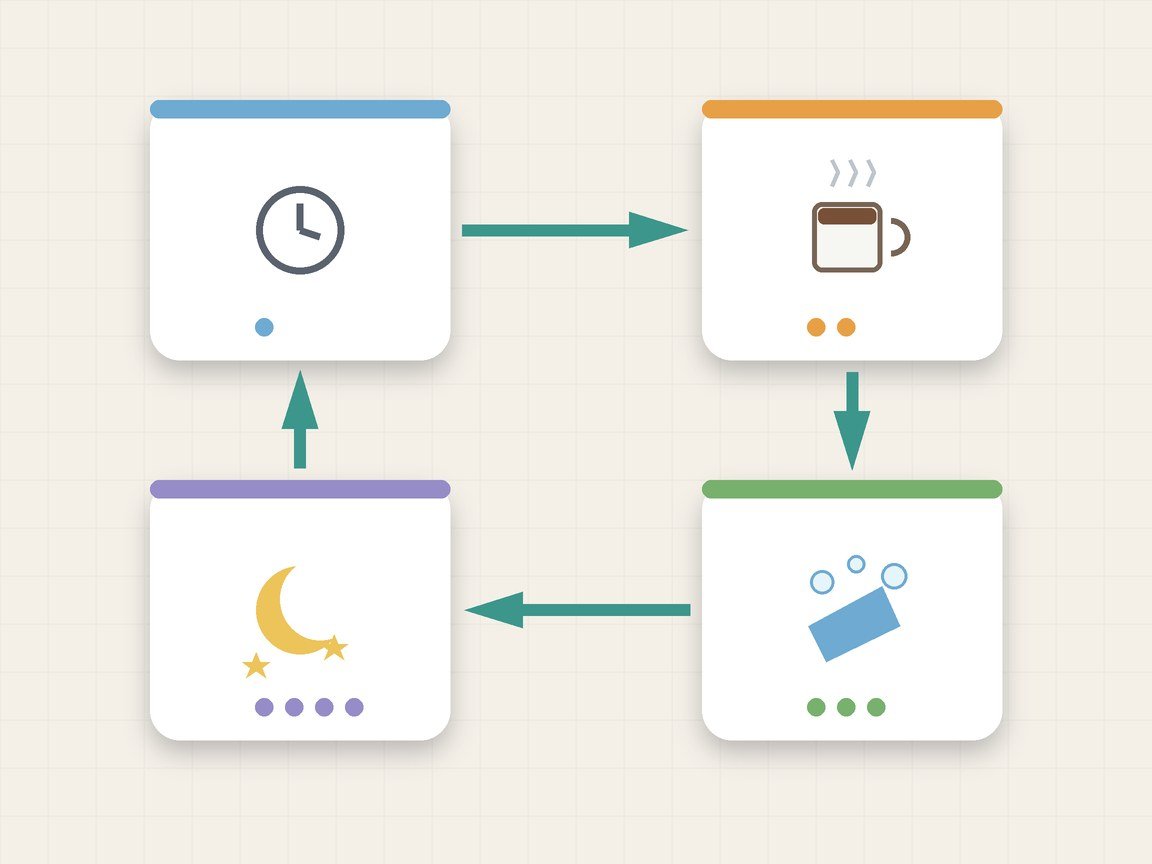
Divide the day into four parts: prepare to open, serve, reset after the peak, and close and clean, each with an owner and a short list that can be repeated every day.
- Prepare to open: check water, milk, beans, cups and lids, clean the brew head as the manual says, and wipe the counter.
- Serve: make drinks in queue order, return milk to the fridge when not in use, and wipe up after each drink.
- Reset after the peak: empty the drip tray and grounds, restock, and wipe milk residue before the next round.
- Close and clean: clean the milk-contact parts as the manual says, check the fridge and record what was done.
How do you look after milk, the machine and cleanliness in a cafe?
Split the work by time: after each drink, daily, weekly and on the technician's round. Clean the milk-contact parts on the schedule the manufacturer's manual sets, because that is where smell and cleanliness problems appear quickly.
| Round | Example tasks | Owner to name |
|---|---|---|
| After each drink | Wipe the brew head and milk wand, close milk containers | The person making the drink |
| Daily | Empty and wash the drip tray and grounds bin, clean the milk-contact parts, wipe the counter, check the fridge | Cafe staff or the named task owner |
| Weekly | Deep clean as the manual says, check use-by dates | Cafe lead or facility team |
| On the technician's or provider's round | Descale, check the water system, change filters | The assigned technician or provider |
Keep a short log sheet beside the machine for people to sign, and when the machine has a problem, photograph the screen and tell the technician rather than taking parts off beyond what the manual allows. A similar daily-check idea for kitchens is in the daily food safety checklist for canteens.
How do you manage the cafe queue at peak times?
Cut the queue with a short menu, cups and ingredients ready before the peak, separate ordering and pick-up points, and simple drinks on self-service.
- Prepare before the peak: have cups, lids and ingredients ready before the crowd arrives.
- Separate ordering from pick-up: people waiting to collect do not block those ordering.
- Repeated long queues: adjust the menu or add people at that time before thinking about another machine.
Ideas that work for both canteens and cafes are in reducing canteen queues at lunch.
How can a cafe reduce cup and coffee-ground waste?
Invite users to bring their own mugs, separate bins for grounds, cups and food scraps, and prepare milk and ingredients in the amounts actually used.
- Own mugs: give them a clean wash point and rack that does not create a new queue.
- Prepare to real use: note what is thrown away often and adjust the amount prepared.
See more in managing food waste in a factory canteen.
What should be agreed with a cafe or coffee corner provider?
Write down who supplies the machine, ingredients and regular staff, who maintains and cleans, and how results are reported to the organisation, including the response time when the machine fails.
| Topic | What to state clearly |
|---|---|
| Machines and equipment | Who owns, installs and repairs them, and whether there is a backup plan when a machine fails |
| Ingredients and supplies | Who supplies milk, beans, cups and lids, and how use-by dates are checked |
| People and training | People per shift, who trains the drink makers and cover when someone is absent |
| Cleaning and reporting | Cleaning rounds as the manufacturer's manual says, a log sheet and a regular review of results |
Procurement can put these topics into a request for proposals, following the approach in the guide to outsourcing canteen management for HR and procurement, and find more questions in how to choose a canteen caterer. A common mistake is to buy the machine first and look for people afterwards; fix the tasks and owners first, then choose the machine. Serving coffee for an occasional seminar or meeting is a different kind of catering, described at coffee break catering.
Frequently asked questions about workplace cafe management
Where should workplace cafe management start?
Start by settling the format, the users, the times and the owner of each task, then choose the machine, the menu and the number of people.
Does a self-service coffee corner need someone to look after it?
It should have one. Even if users make their own drinks, someone still has to restock, clean, check the fridge and call the technician when the machine has a problem. Without a named owner these tasks tend to pile up.
How often should the milk system of a coffee machine be cleaned?
Follow the manufacturer's manual, which often sets a daily round for the milk-contact parts. Record every cleaning.
What needs particular care in an international school cafe?
Follow the school's policy on which drinks may be served to students of which age, and use the school calendar to set opening days.
Does TJ FAVOR GROUP manage cafes or coffee corners in organisations?
Our website describes canteen management and catering services, including coffee break catering for seminars and meetings, but it does not describe an ongoing cafe or coffee corner service in organisations. This article is therefore general guidance. If you are interested, please contact our team to discuss the scope.
Talk to TJ FAVOR GROUP about canteen management and drink points
TJ FAVOR GROUP is a canteen management and catering company based in Bangkok, with more than seven years of restaurant experience. Our team is ready to listen to the needs of your canteen, cafe or coffee corner and offer an initial consultation.
- LINE: @tjfavor (including the @)
- Phone: 063-878-8169 / 087-746-0044 / 096-949-6622
- Website: tjfavor.com
See more on the canteen management page, about us, or contact the team.