Food Waste Management for Factory Canteens: How It Works, Options and a Checklist for HR, Procurement and Facility Managers
Key takeaways
- Food waste in a factory canteen comes from food preparation, over-production and plate leftovers, so it needs a system, not just more bins.
- Thai and international guidance both start with prevention at source, then putting what is left to use, and disposing only of what cannot be avoided.
- A food waste management service for organisations usually covers measuring, sorting stations, staff training, collection or an on-site food waste machine, and reporting.
Food waste management for factory canteens is a topic that HR, procurement and facility managers in Thailand hear about more and more. It comes up through sustainability or ESG targets from head office, through smells and pests around the canteen, and through the cost of ingredients thrown away every day. This guide explains where canteen food waste comes from, how a food waste management service for organisations works, which options exist and what to prepare before you start, with a checklist and questions to ask a provider. It is general guidance to help you plan, not legal advice.
Where does food waste in a factory canteen come from?
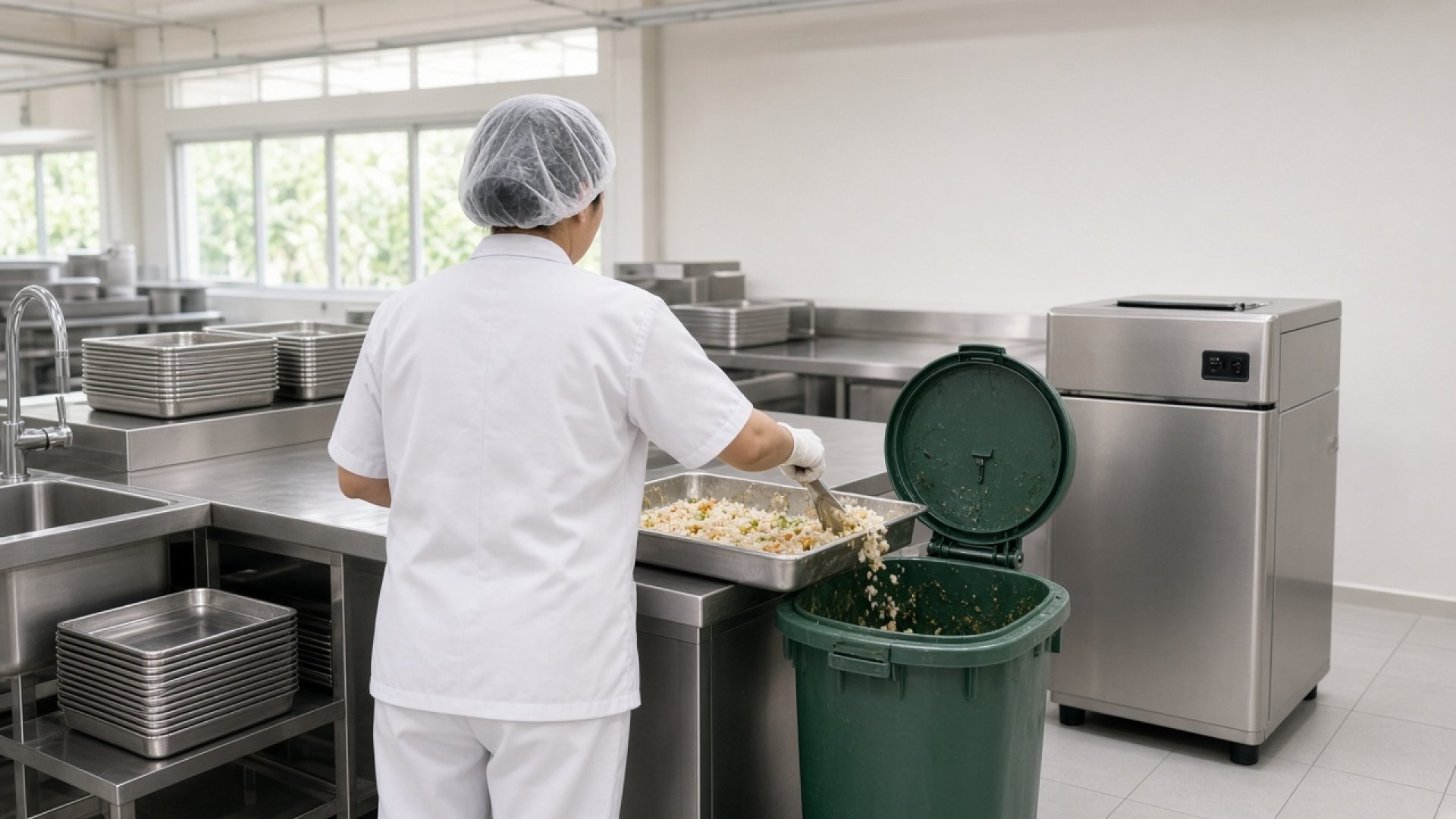
Canteen food waste comes from three main stages: before cooking, during cooking and serving, and after eating. Each stage has different causes and fixes, so knowing where most of your waste comes from matters more than buying equipment straight away.
| Stage | Typical waste | Common causes |
|---|---|---|
| Before cooking | Peels, stalks, vegetable trimmings, bones, expired ingredients | Over-ordering, poor storage, no first-in first-out routine |
| Cooking and serving | Cooked food left unsold, leftover rice in the pot | Inaccurate headcount forecasts; leave, shift changes or line stoppages not shared with the kitchen |
| After eating | Plate and tray leftovers | Portions too large, menus that do not suit staff, food served at the wrong temperature, short breaks |
| Liquids and grease | Leftover soup, used frying oil, grease in the grease trap | Pouring into drains, no containers, no grease-trap pumping schedule |
Thailand's national food waste plan also separates edible food waste, such as over-produced dishes, from inedible parts, such as bones and peels. That split helps an organisation choose the right way to handle each type.
Why is workplace food waste management a trend worth watching?
Government, head offices and employees are all paying more attention to food waste, and poorly handled waste affects both cost and hygiene. Key points:
- National policy: Thailand's food waste management roadmap, published on the environmental quality platform of the Office of Natural Resources and Environmental Policy and Planning, lists office buildings, organisations and in-house canteens among its target food-service groups and stresses separating food waste at source.
- Global goals: the roadmap refers to the UN Sustainable Development Goals, which aim to halve per-capita food waste at retail and consumer level. UNEP's Food Waste Index Report states that food service, which includes restaurants and canteens, is the second-largest source of food waste after households.
- ESG and sustainability reporting: many multinational companies collect waste data from every site, including the canteen. Measured data makes head-office questions easier to answer.
- Hygiene: food scraps left in open bins and grease blocking drains bring smells, insects and rodents, which works against food sanitation guidelines. See our guide to canteen hygiene standards in Thailand.
- Cost: wasted food means ingredients, labour and energy already paid for. Cutting leftovers lets the meal budget go to food that staff actually eat.
Food waste management for factory canteens: how do you start?
The widely used approach is to prevent first, pass on safe surplus food, put the rest to use, and dispose of waste only as a last resort. This order matches the framework in Thailand's food waste plan.
Step one: prevent and reduce at source
- Use shift headcounts, leave data and line-stoppage days to plan orders and how much to cook in each round.
- Cook in batches timed to each break instead of cooking everything in the morning.
- Let staff choose their rice portion or come back for more instead of serving the same amount on every tray.
- Adjust dishes that are often left over, using real data together with factory staff menu planning and a canteen satisfaction survey.
Step two: pass on safe surplus food
Cooked food that has not been served and has been kept at the right temperature may be donated to a food bank or charity. Set clear food safety rules and agree responsibilities with the receiver before you start.
Step three: put food scraps to use
Inedible scraps and plate waste can go to composting, bio-fermented liquid or a biogas operator. Using scraps as animal feed should follow the advice of the Department of Livestock Development, because some food waste carries a risk of animal disease.
Step four: dispose of the rest properly
What is truly left should go into closed containers, kept apart from general waste, and be handed to a licensed collector. The factory's environment team should check whether canteen waste must be handled or reported under Department of Industrial Works rules or local authority rules.
How does a food waste management service work?
A food waste management service for organisations is usually more than waste pick-up: it sets up a system from measuring and sorting to the final destination and reporting. A typical scope looks like this (general guidance):
- Survey and baseline: weigh food waste by stage for a period to see whether the main problem is in the kitchen or on the trays.
- Sorting stations: place separate bins for food scraps, liquids, general waste and recyclables at the tray-return point and in the kitchen, with simple picture signs and several languages if you have foreign workers.
- Training: explain to kitchen staff and employees how to sort and why, then refresh regularly.
- Choosing a destination: for example an on-site food waste machine, compost bins or a collector who puts the waste to use.
- Reporting: summarise food waste per day or per person, trends and improvement ideas for internal or ESG reports.

Comparing destinations for food scraps
| Option | Suits | What to consider |
|---|---|---|
| Food waste composter or dehydrator | Sites with space that want to reduce waste volume on site | Machine size must match real waste volume; electricity, maintenance, odour and what happens to the output |
| Compost bins | Factories with green areas or vegetable plots | Needs regular care and control of smell and run-off |
| Licensed collector for reuse | Sites without space or that do not want to run a machine | Collector licence, a destination you can verify, pick-up schedule and proof of collection |
How are used cooking oil and grease traps linked to food waste?
Used frying oil and grease from washing up are kitchen waste streams that are often overlooked. Poured into drains, they cause blockages, smells and extra load on wastewater treatment. General guidance:
- Store used cooking oil in closed containers and pass it to a buyer that turns it into energy, rather than reusing it for frying.
- Set a schedule for removing or pumping grease from the grease trap and keep records.
- Check with your facility team and local authority which wastewater standard applies to your canteen.
Checklist before starting a canteen food waste project
Before investing in equipment or hiring a provider, know your own data and agree who does what.
- Do you already have food waste weights by stage?
- Do you know headcount per meal and per shift, and the days when numbers change?
- Who owns the project: HR, facilities, the environment team or the canteen provider?
- Have you set a measurable target, such as food waste per person per meal, and a review cycle?
- Are sorting and waste reporting duties written into the canteen provider's TOR? See canteen management outsourcing: a guide for HR and procurement.
What should you ask a food waste management provider?
Good questions show whether a provider can deliver, can be verified and fits the size of your canteen. Examples:
- Which licences do you hold for collecting or handling this type of waste?
- Where does our food waste end up, and can we see documents or visit the destination?
- How do you weigh and report results, how often, and can the data be used in ESG reports?
- If you install a food waste machine, who maintains it and what is the backup plan if it breaks down?
Frequently asked questions
What is the difference between food waste and food loss?
Food loss happens before food reaches shops and consumers, for example during harvest and transport. Food waste happens at retail, restaurants, canteens and households, so a factory canteen falls under food waste.
Where should we start reducing canteen food waste?
Start by weighing food waste by stage for a period, then fix the stage with the most waste first. Often better cooking quantities and menu changes help before any equipment is needed.
Is a food waste machine right for every factory?
Not always. A machine makes sense when you have space, power, someone to run it and a use for its output. Size it from real waste data and compare it with a licensed collector before deciding.
Does TJ FAVOR GROUP collect or dispose of food waste?
Our website currently lists canteen management and catering services, not food waste collection or disposal. If you want ideas for reducing food waste in your canteen, our team is happy to give initial advice.
Talk to TJ FAVOR GROUP about your canteen and food waste
TJ FAVOR GROUP is a Bangkok-based canteen management and catering company with more than seven years of restaurant experience. If you are planning to reduce food waste in a factory canteen, or want a canteen set-up that makes better use of ingredients, our team is ready to give initial advice free of charge.
- LINE: @tjfavor (with the @)
- Phone: 063-878-8169 / 087-746-0044 / 096-949-6622
- Email: tjfavorgroup@gmail.com
- Website: tjfavor.com
See the canteen management service page (Thai), the English home page or contact the team.