Office Pantry Service: What It Is and How to Plan One for Employees, a Guide for HR and Procurement
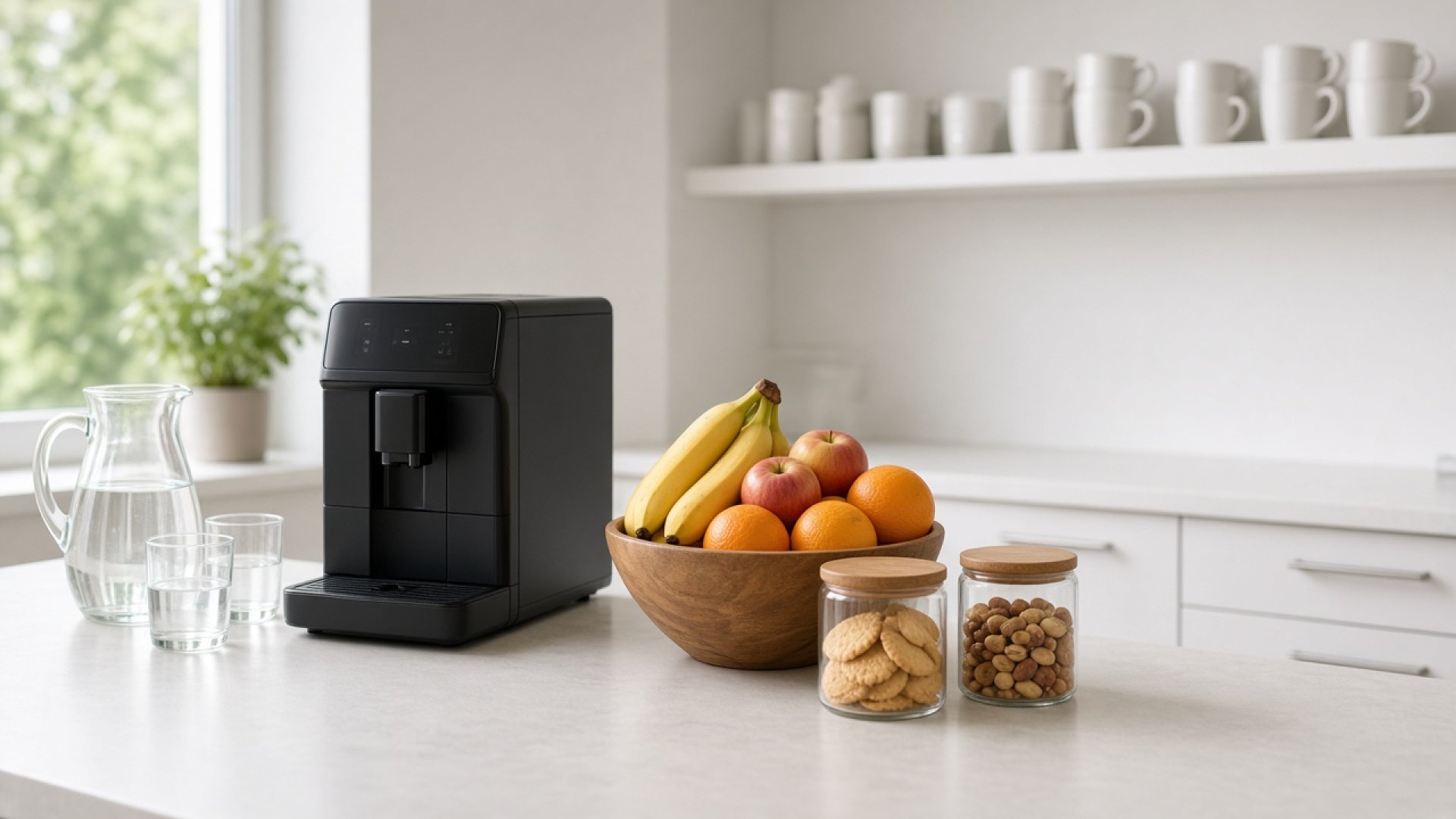
Key takeaways
- An office pantry service plans, supplies, restocks and keeps clean the drinks and snack area for employees, so HR does not have to reorder and chase supplies every week.
- Before choosing a provider, set a tiered budget and check product expiry handling, special-diet options, coffee machine and fridge care, and usage reports.
- A good pantry does not need to be big. It needs to be clean, well stocked and matched to how employees really use it, especially in shift-based workplaces.
As an office or factory grows, the question of an office pantry service soon follows. The coffee, water, fruit and small snacks that a team once bought for itself become a job that needs an owner: ordering, checking expiry dates, restocking and keeping the area clean. This guide explains how a pantry service works, who benefits, how to plan the budget and product range, and which questions HR, procurement and facility managers should ask a provider. It is general planning guidance.
What is an office pantry service, and how is it different from buying supplies yourself?
An office pantry service plans, sources, arranges and restocks drinks, fruit, snacks and kitchen supplies in the staff break area, and keeps that area clean and ready to use. Some providers only deliver goods. Others place an on-site team that restocks and checks inventory on a schedule.
The difference is continuity. Self-service buying often starts well and stalls when the person in charge is away or moves on. A structured service has a restocking round, a product list and a usage report that can be reviewed later, which makes it easier for HR to plan the budget and adjust the range.
How does an office pantry help an organisation?
A pantry supports employee welfare and convenience, and it takes small recurring chores off HR and housekeeping. When drinks and light snacks are close by, people leave the building less often and short breaks are used better.
- A tangible benefit: coffee, tea, water and fruit are used every day, so the benefit is felt quickly.
- Less paperwork: fewer petty-cash claims and fewer small receipts to chase.
- Cleaner spaces: clear waste points, a cup-washing area and cleaning rounds reduce ants, pests and odours.
- Works for shifts: factories that run all day need drinks and snacks within reach on every shift, not only in office hours.
For more on food welfare for shift staff, see meal welfare for shift workers in factories.
What can an office pantry service include?
Scope varies by provider, but it usually falls into three parts: sourcing, on-site care and reporting. Ask each provider to write the scope as a list in the quotation so that offers can be compared fairly.
| Area | Examples of what may be included | What to ask |
|---|---|---|
| Sourcing | Drinks, coffee, tea, fruit, snacks, kitchen supplies | Can you choose the range, and what happens when an item is out of stock? |
| On-site care | Restocking, expiry checks, shelf arrangement, fridge and beverage machine care | Is there a resident team or periodic visits, and how often? |
| Cleanliness | Wiping surfaces, waste handling, cup-washing area | Who supplies cleaning tools and products? |
| Reporting | Summary of items used, stock left, suggestions for range changes | In what format, and can it be reviewed afterwards? |
How do you plan an office pantry that gets used and stays within budget?
Start by understanding how employees use the area, then set the product list and budget in tiers. Do not start with a long shopping list. A small pantry that is restocked consistently is better liked than a large one that often runs out.
A short planning outline
- Look at users and timing: headcount, shifts and peak moments, such as after lunch or before a shift starts.
- Ask employees: a short survey on preferred drinks and snacks, in the same spirit as an employee canteen satisfaction survey.
- Tier the range: everyday basics, rotating monthly extras and seasonal specials.
- Set the budget as a range: agree a monthly total, then adjust from real usage reports instead of guessing up front.
- Pilot first: start with one floor or zone, review, then expand to other floors or buildings.

How do you choose pantry products that are safe and suit every employee?
Choose products that store easily, carry clear labels and include options for employees with dietary limits. A varied range avoids the feeling that some groups are overlooked.
- Labels and expiry: choose products with full Thai labels and rotate stock first in, first out.
- Halal and vegetarian: keep clearly marked items and store them separately. See halal and vegetarian options for staff.
- Food allergies: mark common allergens such as nuts, milk and eggs so people can choose safely.
- Healthier choices: fruit, water and snacks that are not very sweet give health-minded staff options.
- Chilled food: use it only when a fridge is cared for regularly and someone checks dates.
How should the coffee machine and fridge in the pantry be looked after?
Coffee machines and fridges are the equipment that gets dirty or breaks most easily, so name an owner and a cleaning round for each. When nobody is responsible, odours and stains are the first things employees notice.
- Set a regular round for cleaning the machine, drip tray and cup area.
- Set a fridge check day and remove expired or unclaimed items.
- Publish a reporting channel for faults and say who contacts the technician or equipment supplier.
- Provide enough sorted waste bins and a washing point so used cups do not pile up on tables.
How is a pantry different from a canteen and from meeting-room snacks?
A pantry focuses on drinks and light snacks that people take themselves through the day. A canteen focuses on main meals, and meeting snacks are prepared for specific events. Many organisations use all three: a canteen for main meals, a pantry for drinks during the day, and snack boxes or light bites for meeting rooms when guests or seminars are scheduled.
If you already have a canteen, looking after the pantry alongside it keeps employee preference data in one place. For related principles, see the page on canteen management.
What should you ask a pantry service provider before deciding?
Good questions show whether a provider can manage products, cleanliness and reporting in the way you need. Examples:
- How is the scope written, and what is not included?
- How are expiry dates checked and stock rotated for each item?
- If a product is unavailable, what substitute is offered, and is approval needed first?
- Is there a resident team or periodic visits, and who covers absences?
- Who is responsible for the coffee machine, the fridge and broken equipment?
- In what format and how often are usage reports sent?
- Can tax invoices be issued in the company name, and what are the payment terms?
Procurement teams can adapt these questions for their requests for proposal, following the approach in the guide to outsourcing canteen management for HR and procurement.
Frequently asked questions
What should an office pantry include?
It should have drinking water, hot drinks such as coffee and tea, fruit or light snacks, and basics such as cups, spoons and a waste bin. Then adjust the range from usage reports to match what employees really use.
Is a pantry service suitable for a factory?
It can be, especially for factories running several shifts that want drinks and snacks near work areas. Placement, cleanliness and product control should follow each factory's own safety rules.
Should we start with a small pantry first?
Yes. It shows how people really use the space before you invest more. Start with one zone and a basic range, gather employee feedback, and expand once you see what works.
Does TJ FAVOR GROUP provide an office pantry service?
Our website currently lists canteen management and catering services. It does not list office pantry care as a main service. If your organisation is planning this, our team can offer initial advice drawn from our experience in food service and canteen management.
Talk to TJ FAVOR GROUP about food and employee welfare
TJ FAVOR GROUP is a Bangkok-based canteen management and catering company with more than seven years of restaurant experience. If your organisation is planning food and drink areas for employees, whether a canteen, a pantry or light bites for meeting rooms, our team is ready to listen to your needs and offer initial advice.
- LINE: @tjfavor (including the @)
- Phone: 063-878-8169 / 087-746-0044 / 096-949-6622
- Email: tjfavorgroup@gmail.com
- Website: tjfavor.com
See our catering services page, the canteen management page, or contact the team.


