What Are Soft Services? The Canteen and Pantry Side of Facility Management
Key takeaways
- Soft services are the people-focused services in facility management, such as cleaning, the canteen, the pantry, reception and waste-handling planning.
- Hard services look after building systems and structure, such as electrical, plumbing, air conditioning and fire protection. Soft services shape how people experience the building every day.
- The canteen and pantry are soft services that employees use most often, so scope, ownership and coordination with cleaning should be written down clearly.
- Before choosing a provider, survey the real site, write a scope of work, agree on performance measures and ask how reporting and issue handling work.
Facility, HR and procurement teams often see the term soft services in tenders and contractor meetings without a clear list of what it covers. This guide explains what soft services mean in facility management, how they differ from hard services, and where the canteen and pantry fit, with a checklist and questions for choosing a provider. It is general planning guidance, not legal advice. Always check site rules and the regulations that apply to your premises.
What are soft services in facility management?
Soft services are support services that keep a workplace clean, convenient and ready for people, without being direct maintenance of the building's engineering systems. Familiar examples include housekeeping and cleaning, food service or the staff canteen, the office pantry, reception and grounds care.
Organisations may call this building services, general services or soft FM. The names vary, but the idea is the same: these services are judged by service quality and user satisfaction rather than by how a machine performs.
What is facilities management and how is it divided?
Facilities management (FM) is the management of buildings, spaces and support services so that an organisation can keep its core work running. It is usually split into hard services, which look after the building and its systems, and soft services, which look after people and the use of space.
Some organisations hire separate contractors for each service. Others group several services under fewer providers, an approach often called integrated facilities management. The right choice depends on site size, the number of users and how much oversight the in-house team can give.
Hard services vs soft services: what is the difference?
Hard services focus on systems and structure that must work safely and meet requirements. Soft services focus on the services building users experience day to day. The two must work together. A canteen kitchen, for example, depends on the power, water and ventilation that the hard-services team maintains.
| Topic | Hard services | Soft services |
|---|---|---|
| What it covers | Electrical, plumbing, air conditioning, lifts, fire protection, building fabric | Cleaning, canteen, pantry, reception, guarding, grounds, waste-handling planning |
| Main people | Engineers, technicians, systems contractors | Service staff, supervisors and specialist providers |
| How it is measured | System availability, planned maintenance rounds, fault response time | Cleaning audits, complaints, response time, user satisfaction |
| Impact when it fails | Systems stop, safety risk | Spaces feel neglected, staff are unhappy, daily routines are disrupted |
Which services count as soft services?
The exact scope differs by organisation, but soft services usually include work that needs people on site delivering a service every day. The list below covers groups commonly found in offices and factories.
- Cleaning and housekeeping: common areas, restrooms, meeting rooms and periodic deep cleans
- Food service and the canteen: menus, cooking, serving and kitchen cleanliness
- Pantry: drinks, snacks, restocking and a tidy staff break corner
- Waste-handling planning: sorting points, collection rounds and handover to the waste contractor the organisation selects
- Reception and meeting rooms: visitors, room bookings and room set-up
- Guarding and access control: protecting people and premises
- Others: grounds, pest control, mailroom and, at some sites, laundry
Some waste streams, such as production waste or waste with specific rules, should be handled by a specialist contractor whose documents the organisation has checked, not folded into general housekeeping. For canteen food scraps, see factory canteen food-waste management.
Where do the canteen and pantry fit in soft services?
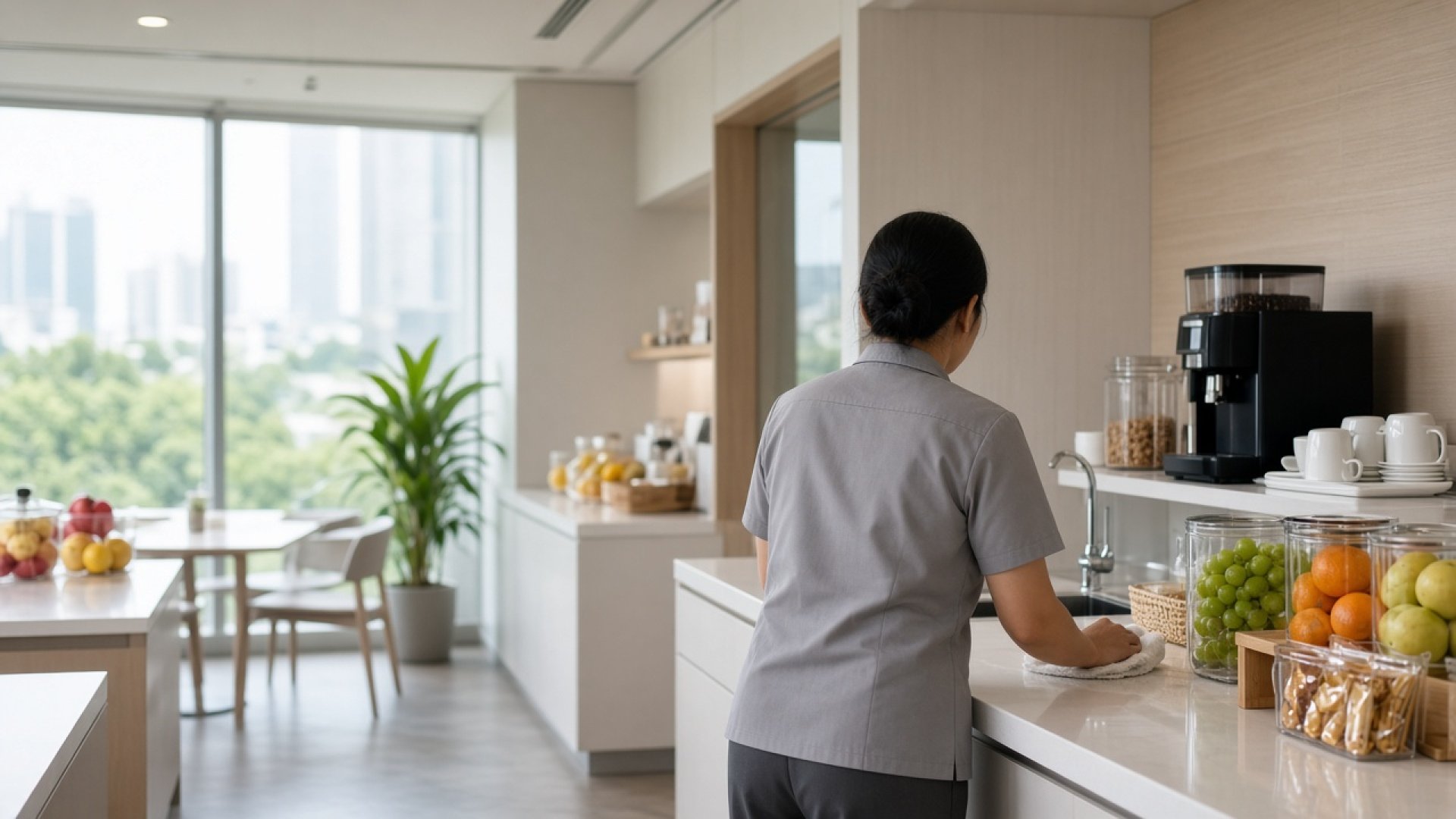
The canteen and pantry are the food-and-beverage part of soft services. Staff use them almost every day, so they strongly shape how employees feel about workplace welfare. Both share space, utilities and cleaning with the rest of the building.
Canteen management covers menu planning, receiving ingredients, cooking, serving around break times and kitchen cleanliness. Office pantry management focuses on restocking drinks and snacks, keeping counters clean and controlling spend under the welfare policy. For more on the pantry side, read the office pantry service guide.
Some factories also run a welfare shop or minimart, which needs stock planned around shifts. See the factory minimart management guide and factory welfare store stock by shift.

What do you gain by coordinating soft services?
When canteen, pantry, cleaning and waste teams share schedules and a coordinator, the gaps between services shrink. Common problems, such as tables not wiped before the next break or food-waste bins overflowing because collection does not match when the serving line closes, usually come from each team working to its own timetable.
- Aligned schedules, such as a cleaning round after each break
- Clear ownership, such as who wipes tables, who washes ware and who moves bins
- One easy-to-read report, so facility teams see the whole site the same way
- One channel for issues, so employees do not have to guess which team to call
Coordinating does not always mean a single contractor. An organisation can use several specialist providers and instead appoint a central coordinator with regular review meetings.
What should you consider before choosing a soft services provider?
Start by surveying the real site and needs, then write the scope of work down before asking for proposals. A clear scope makes proposals comparable and reduces disputes after the start date.
- Areas and hours: buildings, canteen zones, pantries, restrooms and working hours or shifts
- Users: approximate headcount, visitors and peak times
- Scope per service: daily, weekly and periodic tasks, plus what is excluded
- Performance measures: cleaning audits, response time to requests and complaint handling
- Fit with site rules: work safety, chemical use and areas that need permission to enter
If you are preparing a canteen tender, see canteen management outsourcing: an RFP guide for HR and procurement. To scope kitchen deep cleaning separately, read canteen kitchen deep cleaning.
Soft services checklist for facility, HR and procurement teams
- A list of every soft service on site, with an owner for each
- A zone map covering the canteen, pantry, restrooms, waste holding points and corridors
- Cleaning schedules that match break times and canteen opening hours
- Clear boundaries between the canteen team, housekeeping and building-systems team
- Defined sorting points and collection rounds, especially for food scraps and packaging
- Inspection forms and a complaint channel that employees actually use
- Regular performance reviews with every provider
- A backup plan for staff absences and special company events
Questions to ask a soft services provider
Good questions reveal how a provider really works, beyond the sales pitch. Use these in meetings or attach them to your request for proposals.
- Which zones does the proposed scope cover, and what is excluded?
- Who is the on-site supervisor, and when can we reach them?
- How do you check work quality, and how often do you report to us?
- What steps do you follow to receive and close a complaint?
- How do you coordinate with other providers on site, such as the canteen and housekeeping teams?
- What is your plan for staff absences or special events?
- Which documents can we review before the start, such as work procedures or the list of chemicals used?
Frequently asked questions
What are soft services, in short?
Soft services are the people-focused services in facility management, such as cleaning, the canteen, the pantry, reception and waste-handling planning. They differ from hard services, which look after building systems and structure.
What is the difference between hard and soft services?
Hard services cover electrical, plumbing, air conditioning, lifts and fire protection. Soft services cover what building users experience every day. The two must work together, for example a canteen kitchen relies on water, power and ventilation.
Are the canteen and pantry soft services?
Yes. They are the food-and-beverage part of soft services, delivered by people and used by staff every day. Define each scope separately, then set clear hand-off points with cleaning and waste handling.
Should we use one provider or several?
It depends on site size and in-house capacity. One provider means fewer hand-offs, while several let you pick specialists. Either way, you need a central coordinator, clear measures and regular reviews.
Which part of soft services can TJ FAVOR GROUP help with?
TJ FAVOR GROUP works in canteen management, staff meals and event catering. It does not offer cleaning, reception or full facility management. If you are planning a canteen that must work smoothly with the pantry and other building services, the team can give initial advice against your real brief.
Contact the team
TJ FAVOR GROUP is a Bangkok-based company with more than seven years of restaurant experience, working in canteen management, staff meals and event catering. For initial advice on planning a canteen that fits your other soft services, see the canteen management service page, read about us or contact the team. A twenty-four-hour hotline is available.
Phone 063-878-8169 / 087-746-0044 / 096-949-6622
LINE @tjfavor


