Factory Coffee Shop: Concession, Managed Café or Self-Service? A Decision Guide
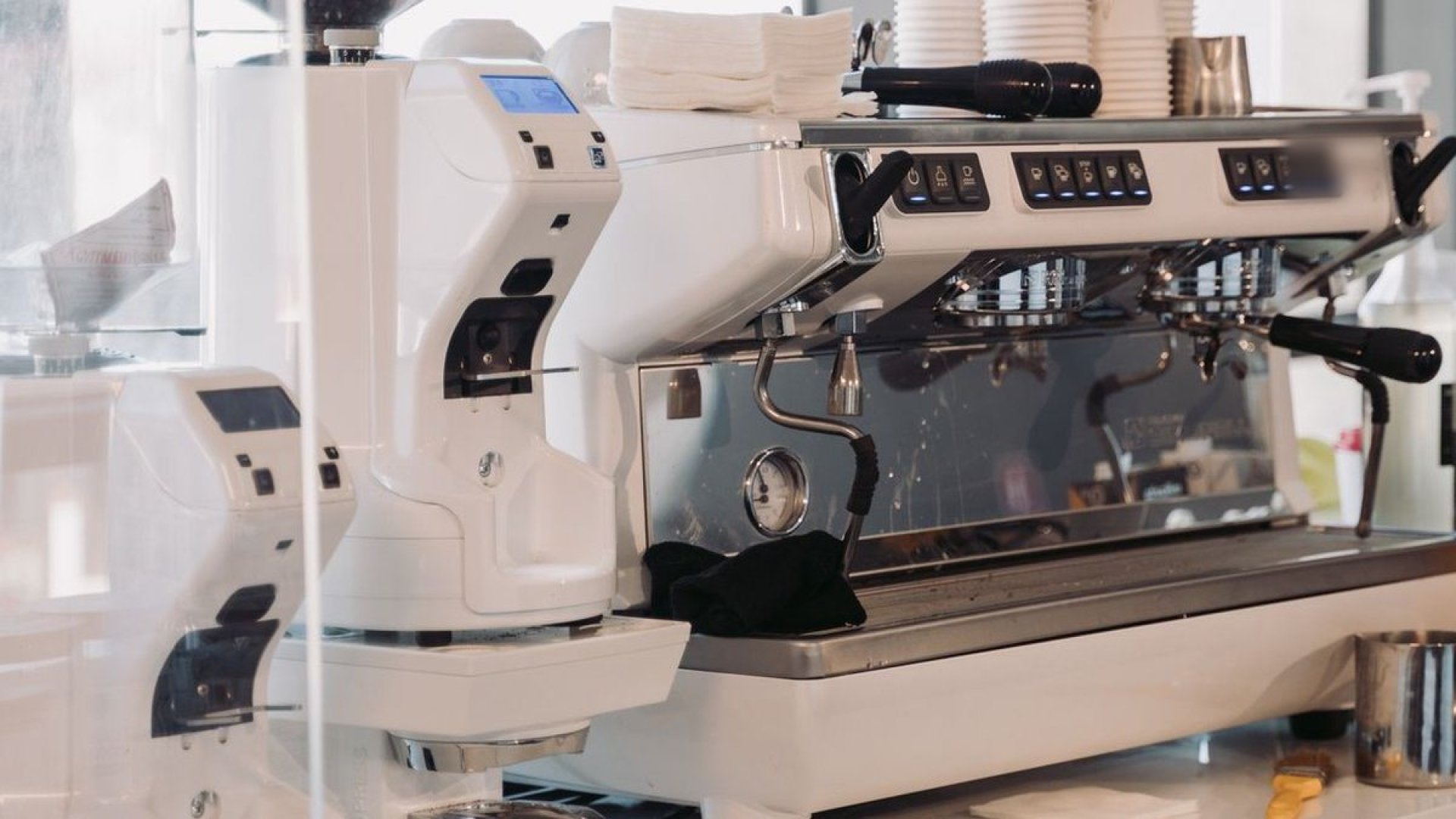
Many factories start thinking about a factory coffee shop after it shows up in the employee satisfaction survey, and then get stuck on the same question: who should run it? Rent the space to an operator, hire an operator and subsidise the café, or simply install a machine for people to serve themselves? Each option has a different payer, a different price-setter and a different owner of the risk. Pick the wrong one and the shop can go quiet within a few months, or become a steady source of complaints about prices and queues.
This is a decision guide for HR, admin and facility managers at factories. We write from seven years of canteen management work inside factory gates, so the focus is on what to decide before opening. For day-to-day running, see our workplace cafe management guide.
Short answer
A factory coffee shop usually follows one of four models: a space rental or revenue-share concession, a managed café subsidised by the company, a self-service coffee point, or a hybrid. Choose based on headcount per shift and break times, who owns the welfare budget, and how much control the factory wants over menu prices. If you run a night shift, a hybrid is usually the workable answer.
What operating models can a factory coffee shop use, and how do they differ?
Split by who pays and who sets prices, there are four models. The real differences are who carries the risk when sales fall short, and how much say the factory has over the menu and prices.
- Space rental or concession. The operator invests in the equipment, sells directly to staff, and pays rent or a revenue share to the factory. The factory spends very little, but the shop must live on its sales, so operators often ask to open only at busy times.
- Managed café with a company subsidy. The company pays a management fee or helps with equipment, and in return decides opening hours, menu and menu prices. This suits factories that see the café as a welfare benefit rather than a source of income.
- Self-service coffee point. An automatic coffee machine or vending unit. It takes little space and can run across every shift, but the drink choice is limited. For vending details, see our factory vending machine guide.
- Hybrid. A staffed café during the day, plus a self-service point for the night shift or for buildings far from the main shop.
Which model fits your factory?
No single model fits every factory. Read this table against your own site data. If more than one row in the "suits" column matches your factory, start by considering a hybrid.
| Model | Who pays for equipment | Who sets menu prices | Risk to manage | Suits |
|---|---|---|---|---|
| Space rental or concession | Operator | Operator, within agreed limits | Prices creeping up, shop closing mid-contract | Large sites that want a shop without a budget |
| Managed café with subsidy | Agreed, partly the company | Company or welfare committee | Costs drifting if nobody measures results | Factories using the café as a welfare benefit to attract staff |
| Self-service | Machine provider or company | As per the machine provider contract | Breakdowns, empty supplies | Smaller sites, or points far from the main shop |
| Hybrid | Split by part | Split by part | Unclear lines of responsibility | Multi-shift, multi-building sites |
What should the factory know about itself before talking to a café operator?
You need the real headcount per shift, the break times for each line, and the walking distance from the production lines to the planned shop. These three things tell you whether the shop will have enough customers and how long the break-time queue will be.
- Headcount per shift, not the site total. The shop only sells to people who are on site while it is open.
- Actual break schedules. If every line breaks at once, a shop with one espresso machine cannot keep up, and pre-ordering may be needed.
- Walking distance. If the walk eats most of the break, people will not come.
- What already exists. Does the canteen already sell drinks? Is there a welfare store or a vending machine? A new shop should not take so many customers that neither survives.
- Budget owner. Is the money coming from HR, a welfare budget, or nowhere at all? The answer almost chooses the model for you.
What space and utilities need to be ready?
A coffee shop needs more than a table and a socket. At minimum it needs a clean water supply with filtration, a drain, an electrical circuit that can carry the coffee machine, and chilled storage. The cost of running these services is often the first point argued over in the contract, so agree early on who pays.
- Ask the factory electrician to confirm the circuit can carry the coffee machine and fridge together. No extension strips.
- The wash-up point and drain must not run into production areas.
- Ask the safety team about site rules, such as no cups or hot drinks on the production line, lidded cups only, or no glass containers in some buildings.
- Waste points for cups and coffee grounds that follow the factory's existing sorting system.
Who should set menu prices, and how do you keep them from becoming a complaint?
In a concession, the operator sets prices, but the factory should approve the menu and price list before opening and write a price review cycle into the contract. In a subsidised model, the factory sets prices itself. What staff usually object to is a price that rises without notice.
An approach that works well is to split the menu into two groups. Core items such as black coffee, white coffee, tea and a drink without caffeine keep a fixed price until the next review. Specialty drinks can move with the operator's costs. If the factory has a welfare committee, ask it to review the core list too.
Think about payment at the same time. A cash-only shop builds long queues at break time. Common options are QR payment, staff cards linked to welfare credit, or payroll deduction, and each needs a reconciliation process agreed with accounting. See our cashless canteen payment guide for details.
What kind of coffee should the night shift get?
The night shift rarely has enough people to keep a staffed café going. The workable option is a self-service point with a named person responsible for refilling and cleaning before each shift change. Write this into the contract from the start rather than asking for it later.

Hypothetical example: a factory runs three shifts. The coffee shop opens before the morning shift starts and closes after the afternoon shift change. The night shift uses an automatic coffee machine next to the canteen. The same operator is responsible for both points. Shop staff close their day by refilling supplies and cups in the machine, wiping it down and filling in the log. The night shift supervisor has a channel to report a breakdown, and the contract sets a response time.
So the hard part of the night shift is not the machine. It is deciding who refills, who cleans and who takes the call when something goes wrong. For ideas on covering every shift, see our night shift meal welfare article.
How do you write a TOR for a factory coffee shop that will not need rewriting?
A good TOR answers when the shop opens, what it sells, who sets prices, who pays for water and electricity, and what happens if the operator does not deliver. The overall structure is close to a welfare store TOR, which you can find in our factory welfare store TOR checklist. The coffee-specific items are:
- Opening and closing times, including the night shift
- The core menu with agreed prices, and the review cycle
- Milk system cleaning and coffee machine care according to the manufacturer's manual, with logs the factory can inspect
- Water, electricity, rent or revenue share, and how each is calculated
- Payment channels, and sales reports if revenue is shared
- Notice required to end the contract, so the factory has time to find a new operator
What should you measure during the trial period?
Agree a trial period in the contract and measure what staff actually experience: break-time queue length, whether core items are available during opening hours, and complaints. Sales matter to the operator, but HR should look mainly at the employee experience.
- Break-time waiting time, checked by spot visits
- Whether the shop opens for the agreed hours, and whether night shift drinks are available
- Cleanliness of the shop and the self-service point
- Complaints, grouped by topic such as price, speed and cleanliness
- A short survey after the shop has been open for a while
When should a factory skip the coffee shop and use something else?
If headcount per shift is too low to support a shop, or coffee demand only appears on meeting and training days, a permanent shop may not be worth it for either side. Lighter options include:
- A self-service coffee corner in the staff rest room
- Ordering a coffee break service for meetings and training only on the days you need it
- A snack box for training sessions or activities that need individual sets
- Asking the existing canteen provider to add drinks, if the contract allows
Frequently asked questions about factory coffee shops
What is the difference between a concession and a managed café in a factory?
In a concession, the operator invests and lives on sales; the factory spends little but has limited control over menu and prices. In a managed café, the company pays but decides opening hours, menu and prices itself.
When should a factory coffee shop open?
Follow the real break schedule, not normal high-street opening hours. For the night shift, use a self-service point that someone looks after before each shift change.
How should a factory control menu prices?
Approve the core menu and prices before opening, write the review cycle into the contract, and require advance notice of every change.
Can TJ FAVOR open a coffee shop in our factory?
The services we offer are canteen management for factories and organisations, plus coffee breaks for meetings and training. If you are planning a drinks point together with your canteen, send us the details and our team will tell you plainly which parts fall within what we can handle.
Related articles
- Workplace cafe management: staff cafe and coffee corner
- Cashless canteen payment systems: a guide for HR and procurement
- Night shift meals: factory meal welfare for every shift
Interested in canteen management?
Contact our team to book a site survey and get a proposal. Tell us your headcount, shift pattern and what you need, and we will help plan it and send a quote at no cost.
Chat with TJ Favor on LINE Call 063-878-8169
LINE: @tjfavor · Call 063-878-8169 / 087-746-0044 / 096-949-6622 (MondayFriday 9:0018:00)