Food Allergen Management in Staff Canteens: From Recipe to Serving Line
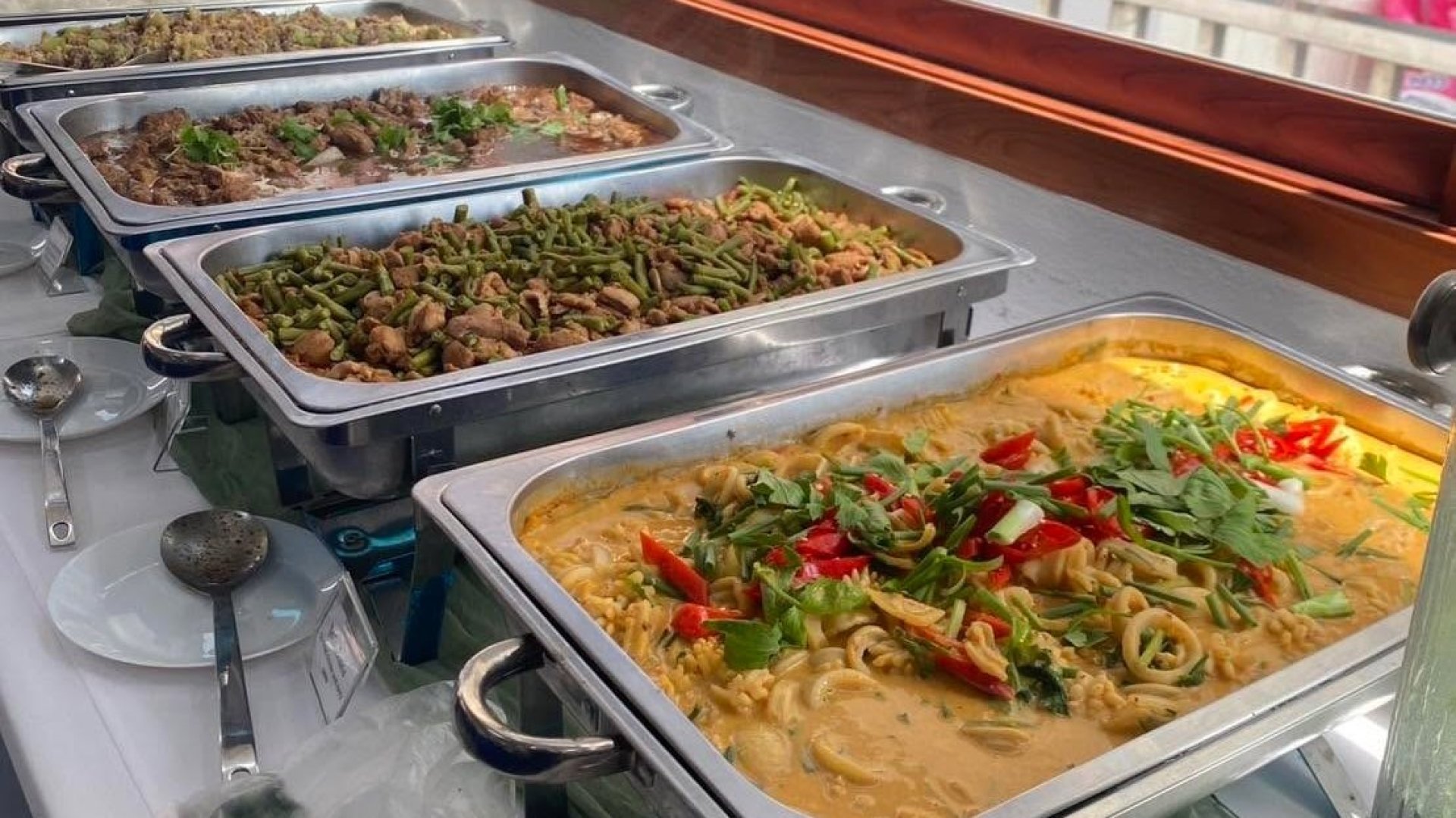
Lunchtime in a staff canteen. Someone at the serving line asks, "Is there shrimp in today's green curry?" The server says no straight away, because all they can see in the tray is chicken and eggplant. But most green curry paste contains shrimp paste. An answer that sounds right can be wrong for someone with a shellfish allergy, and that is the heart of food allergen management in staff canteens: the problem is rarely what you can see in the tray. It is the sauces, pastes and hidden ingredients in the recipe.
This guide is written from the kitchen side of canteen operations. We walk through each point where allergens enter the kitchen, and what HR and procurement should put into the contract. If you are looking for a team to run your kitchen and serving line, see our canteen management service. What each person can safely eat should always follow their doctor's advice.
Which food allergens does Thai law list?
Thailand's Ministry of Public Health Notification (No. 450) B.E. 2567 on labelling of packaged food lists ten allergen groups: cereals containing gluten, crustaceans, eggs, fish, peanuts, soybeans, milk, tree nuts, sulphites, and molluscs and squid. The mollusc and squid group was added to the earlier list of nine. Thai kitchens should watch this group closely, because oyster sauce goes into almost every stir-fry.
The table below translates the list into kitchen language: where each group tends to hide.
| Allergen group | Often hidden in Thai kitchens as |
|---|---|
| Cereals containing gluten, e.g. wheat | Batter, breadcrumbs, egg noodles, wontons, many soy and seasoning sauces |
| Crustaceans, e.g. shrimp, crab | Shrimp paste in curry pastes and chilli dips, dried shrimp |
| Eggs | Some batters, egg noodles, mayonnaise |
| Fish | Fish sauce, fermented fish, fish balls, fish cakes |
| Peanuts | Roasted peanuts in pad thai and som tam, satay sauce, some Thai desserts |
| Soybeans | Tofu, soy sauce, fermented soybean paste, soy milk, textured soy protein |
| Milk and dairy | Condensed milk in Thai tea and coffee, butter, cream, cheese, baked goods |
| Tree nuts, e.g. almonds, cashews | Chicken with cashew nuts, baked goods, granola |
| Sulphites at ten milligrams per kilogram or more | Dried fruit, some pickles and drinks; check the label |
| Molluscs and squid | Oyster sauce, clams, fresh and dried squid |
People with a shrimp allergy rarely pick up a whole shrimp. They are more likely to meet shrimp paste in the chilli dip beside the boiled vegetables.
Does this labelling rule apply to canteen food?
The notification covers packaged food, so it applies directly to packaged products sold in a welfare store. Freshly cooked food served at a canteen line does not carry the same label. Even so, a canteen can adopt the same ten groups as its internal framework, because employees already know the "allergen information" line from product labels. For a legal answer on your specific case, ask the Thai Food and Drug Administration.
A walk through the kitchen: where do allergens get in?
From what we see on the floor, information slips at five points, in the order food travels from recipe to plate.
Point one, the recipe: build an allergen matrix for every dish
Start with one table the whole kitchen shares, an allergen matrix: dishes in rows, the ten groups in columns, ticked for each dish. Go down to seasoning level, not just main ingredients. A simple chicken basil stir-fry can tick fish (fish sauce), molluscs (oyster sauce), and soy and wheat (soy sauce). Add a fried egg and you tick egg too.
Whenever a recipe changes or a new dish is added, update the matrix before the serving day, and give one person ownership of it. Otherwise it quietly goes out of date.
Point two, receiving: a new sauce brand means new data
A supplier sends a different brand because the usual one is out of stock. The recipe stays the same, but what is in the bottle may not. The receiving team should read the allergen line on the label every time a substitute arrives and tell the matrix owner the same day. More receiving checks are in our canteen ingredient receiving guide.
Point three, prep and stoves: shared oil, boards and woks
Allergen cross-contact in canteen kitchens is rarely intentional. It comes from rush: frying battered shrimp and French fries in the same oil, or rinsing a wok with water after a peanut dish. What works in practice is a separate fryer for seafood, colour-coded boards and containers, and a production order where dishes without major allergens are cooked first.
Point four, the serving line: one ladle per tray and labels people can read in the queue
One ladle moved between trays is enough to carry ingredients across dishes. Give every tray its own ladle, swap the whole tray when refilling rather than topping up, and place a label in front of every tray that matches that day's matrix, not an old card reused for weeks.
Train servers too. If they do not know, the right answer is "let me check" and a look at the matrix, not a guess based on what is visible in the tray.

Point five, snacks and the welfare store: read "may contain"
Packaged items in a welfare store already have labels. "Contains" means the allergen is an ingredient; "may contain" means possible cross-contact during manufacturing. If several employees have nut allergies, grouping products whose labels do not list nuts on one shelf makes choosing easier. More on product selection in our factory welfare store product guide.
How should canteen menu labels show allergens?
A useful label shows the dish name, the allergens used in the recipe, and a "may contain" note where relevant, using exactly the same words as the kitchen matrix. For example:
Chicken basil stir-fry with fried egg
Contains: fish (fish sauce), molluscs (oyster sauce), soy and wheat (soy sauce), egg
May contain: shrimp (shared wok with shrimp dishes)
- Use everyday words such as "shrimp, crab" rather than "crustaceans"
- Add Thai and English if you have international staff
- Never write "allergen-safe" or "no allergens" while the kitchen shares equipment, fryers or space; state only what you actually know
An employee reports a food allergy. What happens next?
Have the employee report it through a channel HR defines, record only what is needed, and tell the kitchen what to watch for. How severe the allergy is and what must be avoided should follow that employee's own doctor's advice. Health information is sensitive personal data under Thailand's Personal Data Protection Act, so agree who can see it.
Can the kitchen prepare a separate plate?
Often yes, if the kitchen has separate space and equipment. Agree the alternative dish, cook it before other dishes, and serve it in a lidded, named container. Be honest that a shared kitchen cannot remove every chance of cross-contact.
What if the allergy is severe?
Hold a three-way conversation between the employee, HR and the kitchen manager about what the canteen can and cannot do. Sometimes bringing food from home with separate storage works better. For halal, vegetarian and other special diets, see halal, vegetarian and special diets in staff canteens.
Someone reacts after eating. What should the canteen team do first?
People come first. Alert your organisation's first-aid lead under the emergency plan, and if symptoms look serious, such as difficulty breathing, call the Thai emergency medical hotline 1669 straight away. Kitchen staff should not diagnose or give medicine. Afterwards, record the dish eaten, the time, the sauce batches used, leftover samples and the label on the line, and pass them to HR as agreed.
What should HR and procurement write into a canteen TOR about allergens?
If it is not written down, everyone assumes someone else is doing it. Include:
- The vendor keeps an allergen matrix for every dish in the menu cycle and shares it before new dishes go live
- Steps for recipe changes, supplier changes and substitutes, and who approves them
- Label format, languages and daily updates on the line
- Training so kitchen and line staff answer from the matrix, not from memory
- How allergy reports are received and stored, and what happens after an incident
When vendors pitch, ask to see a real week of allergen matrices, ask how a server would answer "does this have shrimp?", and ask who updates the matrix when the usual sauce runs out. The answers show whether the system lives in the kitchen or only on paper.
Frequently asked questions about food allergen management in canteens
How many food allergen groups does Thai law list?
Ten, under Ministry of Public Health Notification (No. 450) B.E. 2567: cereals containing gluten, crustaceans, eggs, fish, peanuts, soybeans, milk, tree nuts, sulphites, and molluscs and squid. The notification applies to packaged food labels.
Do fish sauce, soy sauce and oyster sauce count as allergens?
They count by what they are made from: fish sauce from fish, soy sauce usually from soybeans and sometimes wheat, oyster sauce from oysters. Check the allergen line on the label of the brand you actually use.
When should a canteen allergen matrix be updated?
Every time a recipe changes, a sauce or ingredient brand changes, or a new dish is added, plus a full review at the start of each new menu cycle.
Can TJ FAVOR GROUP help set this up in a canteen?
We are happy to discuss allergen matrices, menu labels and kitchen steps that fit your canteen, with details agreed according to the actual scope of work.
How do I contact TJ FAVOR GROUP?
Call 063-878-8169 / 087-746-0044 / 096-949-6622 or message LINE @tjfavor, or see our contact page.
Related articles
- Halal, vegetarian and special diets in staff canteens
- Canteen ingredient receiving inspection guide
- Choosing products for a factory welfare store
Looking for canteen management with TJ FAVOR?
Contact our team to arrange a site survey and receive a proposal. Bangkok-based canteen management and catering, more than seven years in operation, no extra service charge and a twenty-four-hour hotline.
Chat with TJ Favor on LINE Call 063-878-8169
LINE: @tjfavor · Call 063-878-8169 / 087-746-0044 / 096-949-6622


