Soft Diet for Patients: Planning Hospital Soft Diet Menus and Kitchen Production
Key takeaways
- A soft diet for patients is food prepared to be tender, in small pieces and easier to chew and swallow than regular meals. Which texture level each patient receives is decided by the hospital's doctor or dietitian.
- The kitchen's and the vendor's job is to produce food exactly to the hospital's specification: texture, temperature, delivery time and tray labels, without mixing up diet levels.
- This is general guidance for hospital nutrition teams, procurement and administrators, not medical advice.
When people search for a soft diet for patients, most want a list of soft foods. Hospital nutrition, procurement and management teams who oversee many patient meals a day face harder questions: how to plan a soft diet menu that does not repeat, how a kitchen keeps texture consistent at volume, and how to write a contract specification that can actually be checked on delivery. This guide covers those points from a food-service point of view. Each patient's meals must always follow the instructions of their doctor or dietitian.
What is a soft diet for patients, and how is it different from a regular diet?
A patient soft diet is food cooked to be tender, cut small and easy to digest, usually boiled, steamed or braised, avoiding crispy fried, chewy or strongly spiced dishes. Hospitals use it for certain patients as the doctor or dietitian sees fit, so in a hospital "soft diet" is a kitchen specification that needs a clear definition, not just a mild-tasting menu.
What does a soft diet include? Common texture levels in hospitals
Names differ between hospitals, but texture levels are often grouped like the table below. The hospital's nutrition team should define each level, and the kitchen and vendor should work from that single definition.
| Diet level | General description | Typical kitchen examples |
|---|---|---|
| Regular | Normal food, not strongly seasoned | Steamed rice, everyday dishes, fruit |
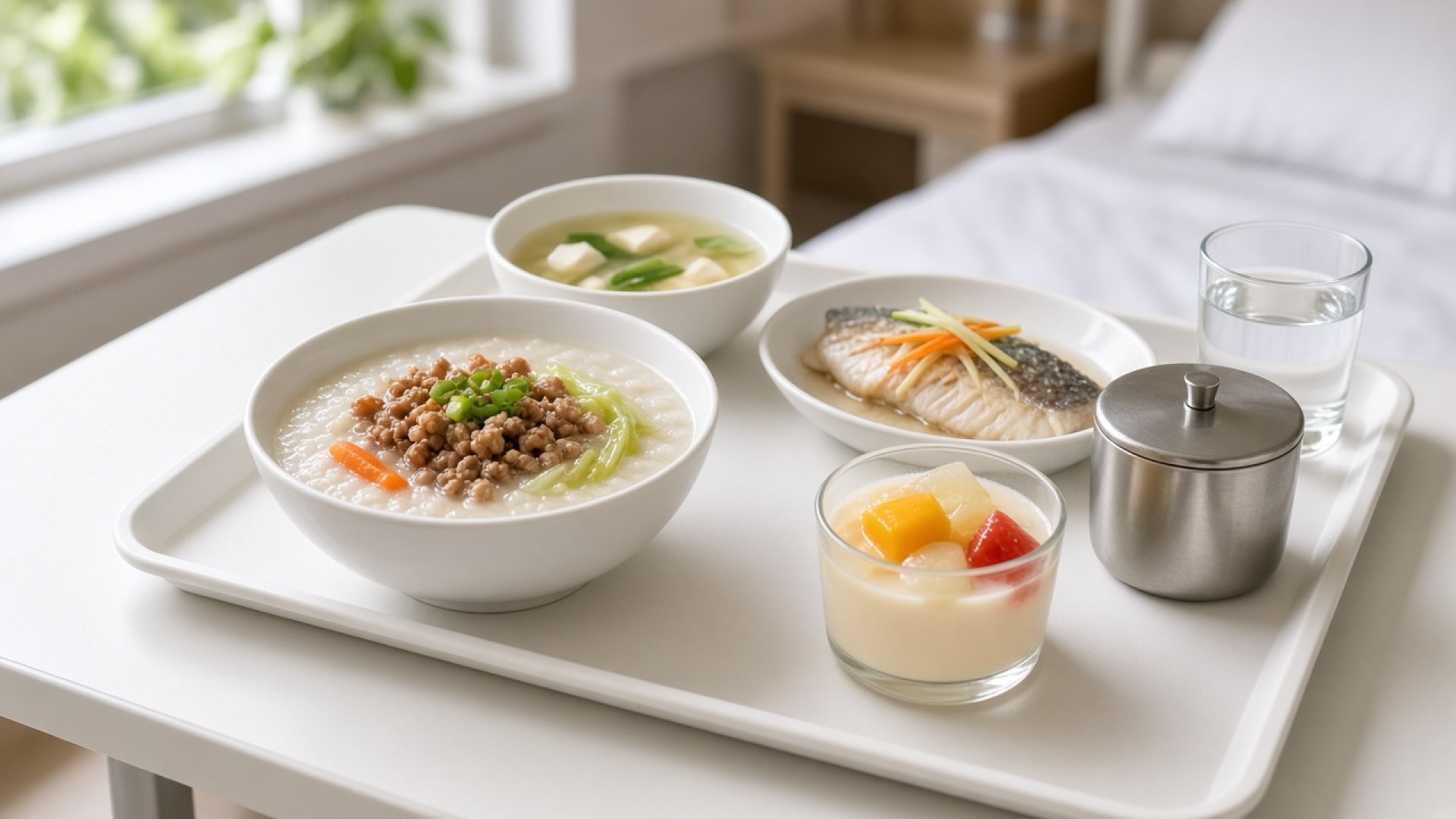
| Soft | Tender, small pieces, easy to chew, not crispy | Rice soup, congee, steamed fish, steamed egg, soft-boiled vegetables |
| Minced or pureed | Fine texture, little or no chewing | Fine congee, finely minced meat in broth, mashed vegetables |
| Liquid | Drinkable or spoonable, no pieces | Clear soup, smooth thick soup, drinks made to the hospital's formula |
For hospital kitchens, what matters more than a long menu list is stating what each level must not contain, such as hard pieces, skins, bones or fish bones, and the maximum piece size, so every tray comes out the same.
How should a hospital soft diet menu be planned so it does not repeat?
Plan a multi-week rotating cycle that alternates proteins, vegetables and cooking methods, and have the nutrition team review it before use. Patients staying several days often tire of the same congee at every meal, so rotation makes food more appealing while staying within the soft diet rules.
- Rotate the base: rice soup, congee, soft-cooked rice, soft noodles in broth.
- Rotate proteins: boneless steamed white fish, minced chicken, minced pork, steamed egg, egg tofu.
- Rotate soft vegetables: pumpkin, carrot, winter melon, Chinese cabbage, ivy gourd leaves, boiled or steamed until tender.
- Rotate mild flavours: clear soups, soft mixed-vegetable stew, pumpkin soup, mild five-spice braise, without relying on chilli or sharp sourness.
- Snacks or desserts that fit the level: soft fruit cut small, pudding or smooth desserts, as the nutrition team allows.
Older patients' texture needs vary widely, so a kitchen should not run a single soft menu for everyone. Prepare minced or pureed versions of the same dish when the doctor or dietitian orders them. Halal and vegetarian options belong in the cycle too, with the same separation of ingredients and utensils used in any canteen. See our guide to halal, vegetarian and special diets in staff canteens.

What does a kitchen need to produce patient soft diets at volume?
Standard recipes for each level, clearly separated steps and containers, time and temperature control, and tray labels matched to the patient list before food goes up to the wards. When several levels are cooked at once, the usual errors are swapped trays or uneven texture rather than taste.
Standard recipes and texture checks
Write each dish for each level in detail, including cooking time, cut size and soup thickness, plus a simple pre-portioning check such as pressing with a fork or spoon. More detailed testing methods should be set by the nutrition team.
Separate lines and containers by level
Use different tray, bowl or lid colours for each level and special diet, portion levels at separate times, and never share ladles between levels, so trays can be checked by eye before they leave the kitchen.
Time and temperature from kitchen to bedside
Many soft dishes are moist foods that spoil easily at room temperature. Cook close to delivery time, use heated carts or insulated containers, and record temperatures at the points agreed with the hospital. See our daily canteen food safety checklist.
Tray labels and a second check
Labels should carry what the hospital specifies, such as ward, bed, diet level and restrictions, with a second person checking before the cart leaves. Bedside checks should be agreed with the nursing team.
Who decides liquid diets and tube feeding?
Liquid diets, especially tube feeding, must follow only the formula and quantity prescribed by the hospital's doctor or dietitian. A food vendor should never create or adjust formulas. If the contract includes this work, state exactly what the vendor does, such as preparing to the given formula, packing, labelling and delivering on time. Families caring for bedridden patients at home should ask a doctor or dietitian before choosing or changing liquid foods.
How should a patient soft diet be specified in an outsourcing contract?
A specification that only says "provide soft food as appropriate" cannot be checked. At minimum, include:
- A definition of each diet level and what it must not contain, approved by the nutrition team.
- The rotating menu cycle and the procedure for menu changes.
- Delivery times for each meal, how daily diet orders are received and how changes during the day are handled.
- Containers, tray colours, tray labels and the pre-dispatch double check.
- Temperature records, food sample retention and incident reporting.
- A feedback channel for patients and nurses to improve the menu.
For the wider scope and TOR preparation, read our patient meal catering outsourcing guide, and for staff and visitor dining see the hospital canteen outsourcing guide.
Questions procurement should ask vendors about soft diets
- How does the kitchen separate production for each level, and what prevents swapped trays?
- Can you share a sample soft diet menu cycle for the nutrition team to review before starting?
- How do you schedule cooking and delivery so soft meals reach the ward warm and safe?
- When a doctor changes a diet order during the day, how fast can the kitchen adjust?
- How are kitchen staff trained on diet levels and hygiene?
To compare vendors systematically, see preparing an RFP for canteen management outsourcing and how canteen types differ in canteen management for factories, hospitals and international schools.
Frequently asked questions about soft diets for patients
What foods are in a soft diet?
Common examples are rice soup, congee, steamed egg, boneless steamed fish, egg tofu and soft-boiled vegetables. What each patient can eat should follow their doctor's or dietitian's advice.
Is a soft diet the same as mild food?
No. A soft diet is about tender, easy-to-chew texture, while mild food is about gentle seasoning. A dish can be mild yet still hard or crispy, so the two terms should not be used interchangeably.
Who decides whether a patient gets a soft or liquid diet?
The hospital's doctor or dietitian. The kitchen and vendor produce food to that order and should never change the diet level themselves.
Does TJ FAVOR GROUP already provide patient soft diets to hospitals?
Our website does not list a patient meal service. TJ FAVOR GROUP is a canteen management and catering company and is happy to hear a hospital's food-service needs and discuss where we could work together.
How do I contact TJ FAVOR GROUP?
Call 063-878-8169 / 087-746-0044 / 096-949-6622 or message LINE @tjfavor, or see our contact page.
Talk to TJ FAVOR GROUP about food service and canteens
TJ FAVOR GROUP is a Bangkok canteen management and catering company with more than seven years of experience in monthly staff meals and canteens, no extra service charge and a twenty-four-hour hotline. If your hospital is planning food service for staff and visitors, or wants to talk through kitchen operations, our team is ready to listen and share initial information.
- LINE: Chat with TJ FAVOR on LINE (@tjfavor)
- Phone: 063-878-8169 / 087-746-0044 / 096-949-6622
- Website: tjfavor.com
Learn more on our About us page or contact the team.


