Patient Meal Catering Outsourcing Guide: What Hospital Procurement and Dietary Teams Should Check
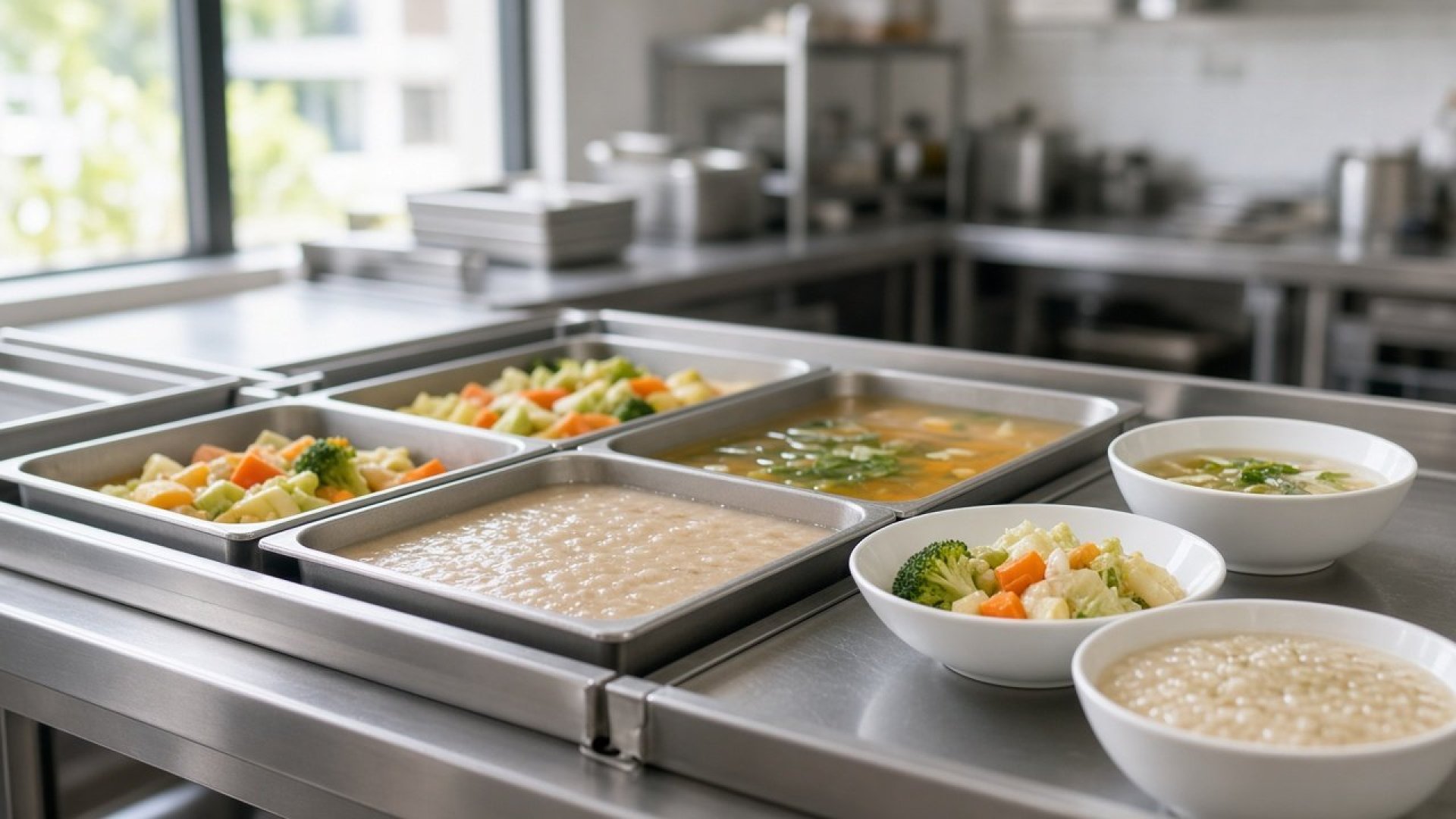
Key takeaways
- Patient meal catering outsourcing means a contracted cook-and-deliver service that follows meal categories set by the hospital and the orders of a doctor or dietitian, not a staff canteen buffet line.
- Before you write a TOR, clarify daily meal volume by day-part, diet categories, kitchen scope, ward delivery routes, quality checks, and the roles of procurement, nutrition and administration.
- This article is general guidance. The TJ FAVOR GROUP website does not currently list hospital patient-meal catering as a service. The team can discuss related canteen management and event catering needs.
When a hospital reviews patient meal catering outsourcing or hospital food service outsourcing, procurement officers, nutrition managers and administrators usually ask the same practical questions: what belongs in the scope, how to name diet categories, and what to ask vendors before a tender. This guide covers a TOR checklist for cooked patient meals, kitchen-to-ward workflow, and vendor questions for cooked patient-meal contracts (prepared meals delivered under an outsourcing model). It is not legal or clinical advice. Meal types must follow doctor or dietitian orders.
What is patient meal catering outsourcing, and how is it different from a staff canteen?
Patient meal catering outsourcing is a contracted service that cooks and delivers meals by hospital-defined categories to wards, following doctor or dietitian orders. A staff canteen focuses on varied menus, high volume and self-service at a counter.
- Staff / factory / office canteens: diners collect food themselves, menus rotate by shift, and the peak rush matters most. See a multi-site overview in canteen management across factories, hospitals and international schools.
- Hospital patient meals: categories must be explicit, trays need labels, delivery reaches the ward or bedside hand-off point, records must be traceable, and vendors must not invent a diet type without a doctor or dietitian order.
- Cooked meal contracting: the vendor covers the agreed stages such as cooking, delivery, ware washing or cleaning of agreed points, while the hospital keeps policy and quality criteria.
What do hospitals usually outsource in patient meal work?
Common scopes include cooking to defined categories, packing and labelling, ward delivery, returning soiled ware, and daily reporting. Hospitals may outsource all or part of this depending on the in-house kitchen.
| Scope often listed in a TOR | What to spell out |
|---|---|
| Cooking and tray assembly | Diet categories supported, cook windows, and how tray mix-ups are prevented |
| Labelling and dispatch papers | Label fields, ward or bed codes, and papers that travel with the trolley |
| Ward delivery | Routes, drop points, arrival windows, and the ward receiver |
| Ware and cleaning | Who supplies ware, who washes it, and interim holding points |
| Reporting and review meetings | Daily report format, incident channels, and review cadence |
If the same site also runs a staff canteen or event catering, keep those scopes separate so patient-meal rules are not mixed with general catering. For a general outsourcing document approach, see the canteen management outsourcing guide for HR and procurement.
What information should you gather before writing a TOR?
Collect real operating data before you lock a patient-meal TOR so every bidder prices the same scope. Incomplete briefs make proposals hard to compare.
- Volume and timing: approximate meals per day by breakfast, lunch, dinner and any extras, plus the windows when wards must receive trays.
- Diet categories to support: at least regular, soft, reduced-salt and condition-specific categories at category level only. Clinical detail stays with the hospital dietitian under doctor orders.
- Kitchen location: on-site hospital kitchen, vendor central kitchen, or a mix, and who pays for utilities.
- Delivery path: internal map, lift waiting points, trolley holding points and quiet-hour limits on wards.
- Internal roles: who approves menus, who receives at the ward, who handles complaints, and who can pause service.
- Quality checks: sample daily check forms, sampling method and records to keep. For a general daily canteen checklist, see the canteen daily food safety checklist.
Which patient meal categories should appear in the documents?
Name categories clearly in the TOR, but keep clinical specifications under doctor or dietitian orders. Vendors should not infer a diet from a diagnosis name or from a verbal request alone.
| Category often listed | Category-level meaning | Watch-outs |
|---|---|---|
| Regular | General meals under the hospital framework for diners without special limits | Still needs menu approval from the hospital nutrition team |
| Soft | Softer texture that is easier to chew and swallow under dietitian rules | Do not substitute a rough mash unless the order says so |
| Reduced-salt | Salt controlled within the hospital framework | Needs cross-contact controls versus strongly seasoned lines in the same kitchen |
| Condition-specific | A category driven only by doctor or dietitian orders | It is a category label only, not a clinical outcome claim |
Separate categories to support from clinical specs. The hospital owns the specs; the vendor follows them. If ingredients are received into the kitchen, use a clear receiving routine. See the general guide on canteen ingredient receiving inspection.

Which kitchen-to-ward checkpoints matter most?
The main risk points are tray mix-ups, temperature control in transit, the ward hand-off and traceable records. Temperature control here means keeping hot or cold food within the agreed holding approach during transport, not any clinical claim.
- Before leaving the kitchen: match trays to the list, confirm labels and close containers.
- In transit: use the agreed route and equipment, limit lid opening and log kitchen departure time.
- At the ward: hand over to the named receiver and re-check tray count and labels before final distribution.
- After service: collect ware at the agreed point, separate used items and log issues such as late arrival or missing trays.
When a hospital kitchen is shared with other work, define zones and time windows so floor teams are not confused.
What should procurement ask vendors?
Ask for a real operating picture, not only a quote. These questions help compare vendors in the same frame and align with the broader advice in how to choose a canteen caterer.
- Have you handled individually labelled meals delivered to fixed points, and how do you describe the steps?
- How do you prevent tray mix-ups and cross-contact between diet categories?
- Who owns floor quality control, and how can the hospital review daily records?
- When a menu must change under a doctor or dietitian order, how do you take the change and within what agreed time?
- Will you use an on-site kitchen or a central kitchen, and what is the backup if the kitchen or route fails?
- Can you show sample hand-off forms, check sheets and incident channels?
- Does the scope include ware, cleaning and staff who deliver to the ward?
Strong answers describe steps you can verify, not vague promises without evidence.
A short checklist before you open the tender
Run an internal checklist before you publish so you are not rewriting the TOR mid-process.
- Draft scope line by line with the diet categories to support.
- State that clinical specs belong to the hospital and that the vendor follows doctor or dietitian orders.
- Set evaluation criteria such as similar work experience, staffing plan, quality-control plan and delivery plan.
- Prepare a site walk of the kitchen and delivery path if hospital policy allows.
- Define report formats, meeting cadence and escalation paths.
- Keep patient-meal work separate from staff canteen or banquet work if the same vendor is considered.
FAQ on patient meal catering outsourcing
How is patient meal outsourcing different from staff canteen outsourcing?
Patient meals focus on ordered categories, labelling and ward delivery. Staff canteens focus on rotating menus and serving many diners at a counter or pick-up point in a short window.
Who should own condition-specific diet specs?
The hospital, through doctors and dietitians, should own clinical specs. The vendor follows the specs it receives and should not invent clinical specs.
What should a patient-meal TOR cover at minimum?
At least scope, diet categories, approximate meal volume, kitchen and delivery path, quality criteria, report templates, role split and rules for menu changes under orders.
Does TJ FAVOR already provide hospital patient meal catering?
The TJ FAVOR GROUP website does not currently list hospital patient-meal catering as a service. This article is general guidance for procurement and administrators studying the topic. For canteen management, event catering or other site meal needs, the team is glad to discuss your brief.
How can you contact TJ FAVOR GROUP?
Call 063-878-8169 / 087-746-0044 / 096-949-6622 or message LINE @tjfavor. Other channels are on the contact page.
Talk with TJ FAVOR GROUP about canteen and catering needs
TJ FAVOR GROUP is a Bangkok-based canteen management and event catering company with more than seven years of restaurant experience. Work includes factory, office and school canteens plus event catering, with tableware provided and no extra service charge as stated on the website. Event catering usually needs a two-day lead time. The team can listen to related briefs and share basic information without claiming to be a current hospital patient-meal provider.
- LINE: @tjfavor (include the @)
- Phone: 063-878-8169 / 087-746-0044 / 096-949-6622
- Website: tjfavor.com
See canteen management, event catering, about us or contact the team.


