Office Lunch Box Ordering Guide: What HR and Procurement Should Specify
Key takeaways
- An office lunch box is a cooked midday meal packed for one person and delivered to the workplace on agreed dates and volumes, not a canteen buffet line where staff choose from open pans.
- Before you order boxed lunches for the office, specify hybrid-day headcount, the delivery window, the receiving point, labelling, how cooked food will be held, and the halal, vegetarian and allergen categories you need.
- This article is general guidance for HR, procurement and office managers comparing boxed meals with a full canteen. The TJ FAVOR GROUP team can discuss staff-meal and canteen needs.
When HR, procurement or an office manager starts looking at an office lunch box programme for a hybrid workplace, the same questions appear: when does a boxed lunch for office staff fit better than a full canteen, what should you specify before you ask for a quote, and how do you hold cooked food until people eat? This guide covers those choices. It is not legal or medical advice. Special diets must follow what employees declare and any guidance from a doctor or dietitian.
What is an office lunch box, and how is it different from an office canteen?
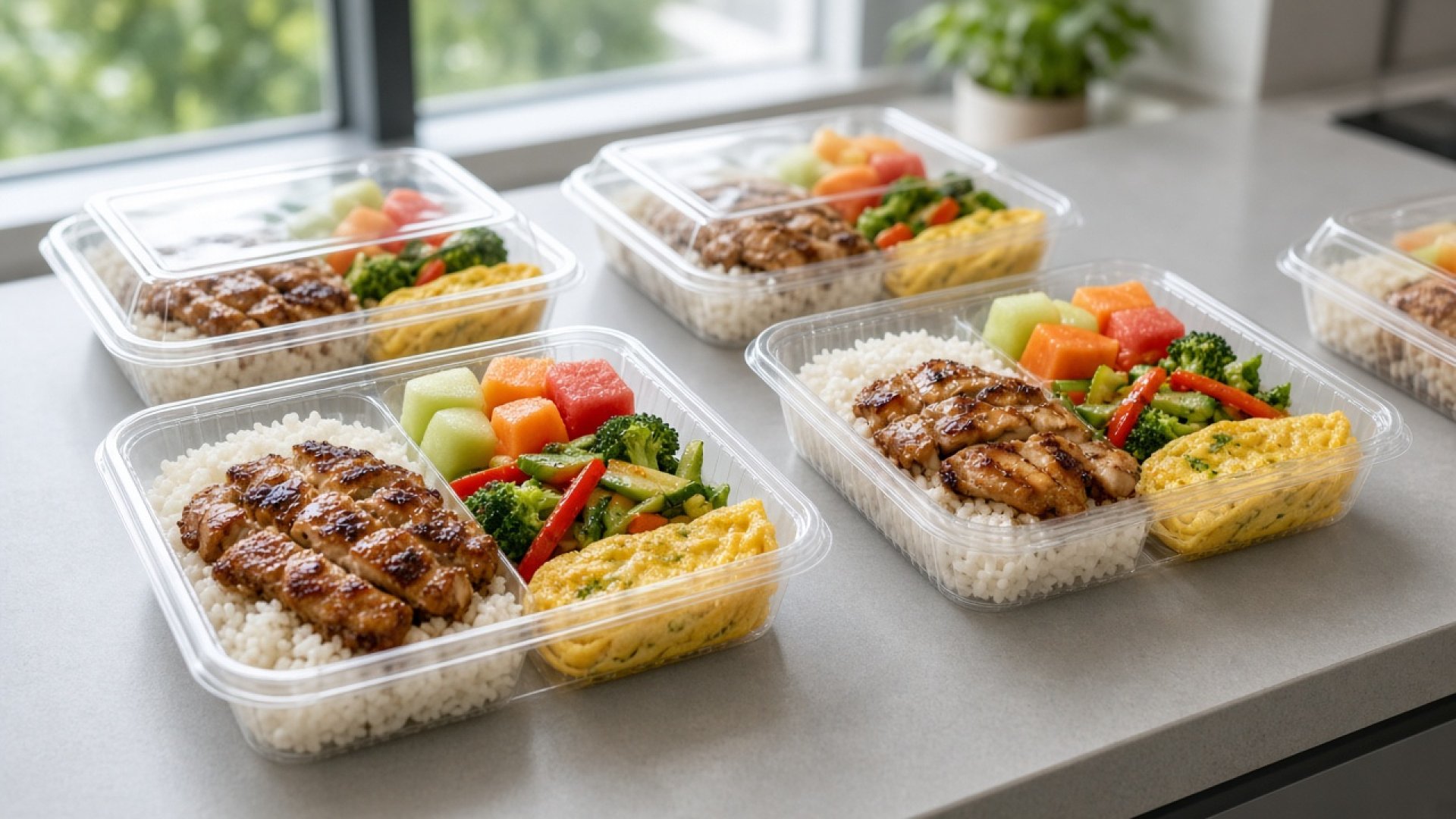
An office lunch box is a cooked meal packed as an individual portion, then delivered or set out at the office on the dates, quantities and time window you agree. An office canteen has a counter or kitchen in the building, and staff collect food themselves from the line open that day.
- Office canteens: there is on-site prep or service space, staff collect food at a counter, and the model fits when daily headcount is steady. See canteen management.
- Office lunch boxes: delivery to the workplace, one menu set per box, volume that can flex on hybrid days, and no need for an office kitchen.
- Monthly boxed meals: a recurring office lunch box order on agreed working days, still adjustable when you set clear rules for quieter days.
Both models are office meal welfare, but they differ in space, floor staff and special-diet labels. If you are also comparing operators, see how to choose a canteen caterer.
Which workplaces find boxed lunches a better fit than a full canteen?
An office lunch box programme often fits workplaces where daily attendance moves around, there is no kitchen, or the team is not ready to open a full service line. That does not mean boxes suit every office; it means you can match the model to real constraints.
| Model | Often fits when | What the workplace must prepare |
|---|---|---|
| Full office canteen | Kitchen or counter space exists, and weekday headcount is steady | Utilities, queue space, ware washing and a building coordinator |
| Office lunch box | Hybrid offices, smaller branches or leased floors without a kitchen, where individual labels matter | A delivery window, drop-off point, receiver and rules for changing counts by day |
| A meal allowance so staff buy their own lunch | People can easily eat outside, and the company does not want to run a shared midday meal | More variation in quality, break time and allergen information |
Offices that fill up on collaboration days and empty out on remote days can use boxed lunches instead of running a kitchen for a thin room. Sites that are full every weekday and already have space may prefer a standing canteen. See the monthly employee meal delivery article. If the same office also hosts training or parties, keep daily boxed-lunch work separate from event catering; see the event catering page.
What should you specify before ordering office lunch boxes?
A complete brief lets every vendor describe the same scope, so procurement can compare proposals fairly. A rough total headcount alone often leads to mismatches on hybrid days, special diets and the drop-off point once service starts.
- Headcount and hybrid days: box counts by weekday, busy on-site days and quiet days, plus how you will give notice of changes.
- Delivery window and receiving point: when the office can accept goods, the goods lift, short-stay parking.
- Labelling: whether boxes need a name, department, menu type or only a special-diet code, and which language appears on the label.
- Packaging and waste: who supplies the boxes, who collects used ones, and whether the office has a leftover-food point.
- Menu rotation: how often menus change, how you retire items that clash with common allergens, and how staff comments are gathered. See staff menu planning.
- Special diets: your definitions of halal and vegetarian meals, and the channel for allergen notes taken from employee declarations.
- What happens when something is wrong: who to call if a box is missing, late or swapped, and who may decide on the office side.
- Handover documents: delivery-note format, how counts are summarised and who signs. For a broader document view, see the canteen management outsourcing guide for HR and procurement.
How should you hold cooked food in the boxes?
Cooked food in an office lunch box should travel with lids closed and reach staff close to the time they eat. The points below are general guidance on holding boxed lunches safely. They do not cite temperatures or clock times.
- Book a delivery window close to the lunch break, and do not leave boxes in a vehicle or lobby without a receiver.
- Keep lids closed while people wait, and hold items that should stay hot apart from items that should stay cold.
- Do not leave boxes in the sun, near a heat source, or in a walkway where lids get knocked open.
- If the delivery arrives early, use the agreed holding point rather than piling boxes on the reception desk and opening them to check.
- Ask the vendor to explain packing and transport. The receiver should check counts, labels and box condition on arrival.
Workplaces that run a canteen can adapt daily checks to the box receiving point. See the canteen daily food safety checklist.
Halal, vegetarian and allergen handling in an office lunch box programme
Special diets in an office lunch box programme need clear definitions and labels so the right meal reaches the right person. Person-level detail should follow employee declarations and doctor or dietitian guidance. The vendor should not invent a restriction from a symptom name or a verbal request alone.
- Halal office lunch boxes: spell out ingredient sources, how tools or cooking rounds are separated, and how packing stays apart from general boxes.
- Vegetarian office lunch boxes: say whether you mean vegan, or vegetarian meals that still include egg and milk, so the definition does not drift mid-month.
- Allergens: label the allergens that must be avoided according to the data you supply, and keep special boxes from being swapped in transit or at handoff.
Separating categories to support from person-level instructions lets HR own employee data while the vendor follows what it receives. See halal, vegetarian and special diets in staff canteens.

What should HR and procurement ask before choosing a vendor?
A practical way to choose an office lunch box vendor is to ask for real working steps, not broad claims. Use the same questions to compare vendors in one frame.
- Have you run monthly office lunch boxes or boxed lunches for company staff in a hybrid office, and how do you change counts by day?
- Until when can the office add or reduce boxes, and who receives that request?
- How do you label special-diet boxes and keep them from being swapped with general boxes, from the kitchen to the employee?
- If a delivery runs late, a route is closed or a box is damaged, what is the backup plan and how is notice given?
- Can you show a sample rotating menu, a sample label and a channel for staff comments?
- Who is the standing coordinator, and how can HR raise a change without restating the whole brief?
A checklist before you request a quote or start a regular order
Before you request a quote or start a monthly boxed-lunch order, finish an internal checklist so the scope does not keep shifting after deliveries begin.
- Summarise box counts by day and hybrid pattern, with a named person who may change the count
- Set the delivery window, receiving point, receiver and a holding plan if boxes arrive early
- Draft the special-diet categories you need, and state that allergen data belongs to the company
- Set vendor criteria such as similar experience, packing, labelling and an incident channel, then run a short trial before you expand to a monthly rhythm
- Separate one-off event catering from the daily office lunch box if you speak with the same vendor about both
FAQ on office lunch boxes
How is an office lunch box different from an office canteen?
An office lunch box is packed for one person and delivered to the workplace, so it flexes with hybrid days and does not need an in-house kitchen. An office canteen has a counter or kitchen on site and lets staff choose food themselves, so it fits when headcount is steady and space is available.
What should you prepare before ordering monthly office lunch boxes?
At least weekday counts, the delivery window, the receiving point, label format, halal, vegetarian and allergen categories, rules for changing quantities, and named coordinators on both sides, so quotes can be compared.
How can you hold boxed lunches safely?
Schedule delivery close to the meal, keep lids closed, separate hot and cold items, use an agreed holding point and check labels on arrival. This is general guidance, not a substitute for a site-specific review.
When should you look again at a full canteen?
When on-site headcount is steady, kitchen or counter space exists, and the company wants staff to choose from a line in a managed dining area. Boxed lunches can still support smaller branches if you keep the scopes separate.
How can you contact TJ FAVOR GROUP?
Call 063-878-8169 / 087-746-0044 / 096-949-6622 or LINE @tjfavor, and see other channels on the contact page.
Talk with TJ FAVOR GROUP about staff meals and canteen needs
TJ FAVOR GROUP is a Bangkok-based canteen management and event catering company with more than seven years of restaurant experience and ten restaurant branches. The team handles canteen work for factories, offices and schools, plus event catering, with tableware provided for events while the customer prepares the venue, tables, chairs and power outlets. There is no extra service charge as stated on the website. General event catering usually has a two-day lead time, and there is a twenty-four-hour hotline. The team can discuss office lunch boxes, monthly staff meals and canteen management.
- LINE: @tjfavor (include the @)
- Phone: 063-878-8169 / 087-746-0044 / 096-949-6622
- Website: tjfavor.com
See canteen management, event catering, about us or contact the team.