Canteen catering in Thailand: Hygienic and modern.
Last updated: 16 Jul 2026
483 Views
Canteen Catering Business in Thailand: A Strategic Management Guide to Success
In Thailand’s fast-paced economic landscape, the canteen catering business has become an essential gear driving productivity. From traditional food stall setups, this business has transformed into "Integrated Foodservice Management" requiring high professionalism. This article deep dives into the key elements to succeed in this market.
1. Understanding Target Markets and Diverse Needs
The Thai canteen market is divided into segments with distinctly different behaviors and demands:
Industrial Sector (Factories): Focuses on volume, speed, affordability, and sufficient energy. High-efficiency cost management is key to maintaining quality within limited prices.
Educational Sector (Schools): Focuses on complete nutrition, maximum safety, and cultural diversity. Recognized hygiene certifications are highly required.
Corporate Sector (Offices): Focuses on convenience, taste, modernity, and healthy options like clean food or salad bars.
2. Hygiene Standards and Food Safety: The Core Core
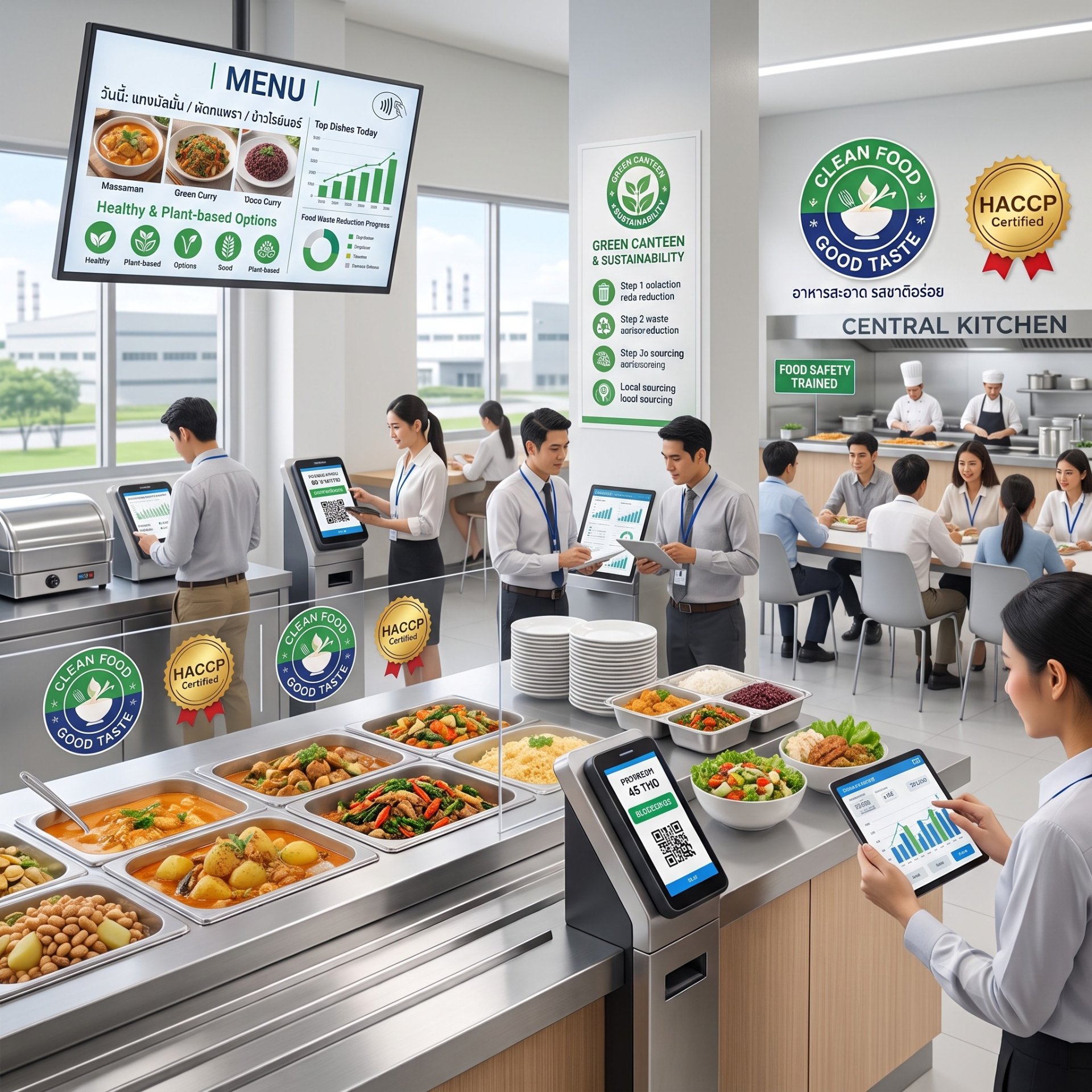
This is the most critical factor in running a canteen in Thailand. Obtaining international certificates such as HACCP or ISO 22000 creates high trust with large clients. All staff must pass food sanitation training to ensure daily safety.
3. The Role of Technology in Modern Canteens
To enhance operational efficiency, technology has become a solution:
Cashless Society: Accepting payments via QR Code or corporate badges shortens queuing time and accurately collects sales data.
Data Analytics: Analyzing sales data helps identify best-selling dishes, facilitating better raw material planning and minimizing food waste.
In Thailand’s fast-paced economic landscape, the canteen catering business has become an essential gear driving productivity. From traditional food stall setups, this business has transformed into "Integrated Foodservice Management" requiring high professionalism. This article deep dives into the key elements to succeed in this market.
1. Understanding Target Markets and Diverse Needs
The Thai canteen market is divided into segments with distinctly different behaviors and demands:
Industrial Sector (Factories): Focuses on volume, speed, affordability, and sufficient energy. High-efficiency cost management is key to maintaining quality within limited prices.
Educational Sector (Schools): Focuses on complete nutrition, maximum safety, and cultural diversity. Recognized hygiene certifications are highly required.
Corporate Sector (Offices): Focuses on convenience, taste, modernity, and healthy options like clean food or salad bars.
2. Hygiene Standards and Food Safety: The Core Core
This is the most critical factor in running a canteen in Thailand. Obtaining international certificates such as HACCP or ISO 22000 creates high trust with large clients. All staff must pass food sanitation training to ensure daily safety.
3. The Role of Technology in Modern Canteens
To enhance operational efficiency, technology has become a solution:
Cashless Society: Accepting payments via QR Code or corporate badges shortens queuing time and accurately collects sales data.
Data Analytics: Analyzing sales data helps identify best-selling dishes, facilitating better raw material planning and minimizing food waste.
Related Content


Is your current workplace canteen just a place to grab a quick bite, or is it a driving force behind employee satisfaction and productivity?
In today’s fast-paced industrial and corporate environments, a well-managed cafeteria is no longer a luxury—it’s a strategic asset. As a premier corporate food service solution, we specialize in transforming standard factory and office canteens into high-efficiency, hygienic, and vibrant dining hubs.
29 Jun 2026
