Canteen Complaint Handling: How to Receive, Investigate, Fix and Report Back, for HR, Procurement and Facility Managers

Key takeaways
- Good canteen complaint handling starts with easy reporting channels and a named person who actually replies to employees.
- Every case should follow the same steps: receive, record, acknowledge, classify, find the cause, fix, report back and follow up.
- Anything involving food safety, illness or an allergic reaction must be treated as urgent and escalated to management straight away.
When employees grumble about the food, for example too salty, not hot enough or small portions, many organisations take the message through a chat group or by word of mouth and then forget to follow up. This guide explains canteen complaint handling as a simple, repeatable process: reporting channels, steps, a record form, urgency levels, root-cause checks, replying to employees and what to agree with your canteen provider. It is written for HR, procurement, facility and office managers and business owners. Most of it is general guidance; anything about TJ FAVOR GROUP is taken from what the company states on its website.
What do employees complain about most often in a canteen?
Mostly everyday matters: taste, food temperature, portion size, cleanliness, waiting time and repeated menus. Allergy and food-safety cases are less frequent, but they always need a serious response. (general guidance) Sorting complaints into types from the start gets each one to the person who can fix it.
| Complaint type | Typical examples | Who is usually involved |
|---|---|---|
| Taste and food quality | Too salty or bland, hard rice, food not hot | Head chef |
| Portion and variety | Small servings, repeated menus, too few choices | Head chef and HR |
| Cleanliness and foreign objects | Dirty tables, unclean tableware, a foreign object in food | Canteen manager |
| Service and queues | Long waits, impolite staff, food running out early | Canteen manager and facility team |
| Special diets | Halal, vegetarian or allergy needs not met | HR and head chef |
| Food safety | Suspected spoiled food, illness after a meal | Management and the provider immediately |
Which complaint channels should a staff canteen offer?
Offer at least two channels that every shift can reach easily, and say clearly who receives the reports. A channel nobody answers is abandoned very quickly. (general guidance)
- An online form via QR code: placed on tables and at the exit, suited to employees who use smartphones.
- A suggestion box and paper forms: suited to production staff who cannot use phones at work. Empty the box on a regular schedule.
- Telling the canteen manager on the spot: allows an immediate fix such as replacing a plate or refilling a dish.
- An HR channel: a chat group or shared mailbox for matters people would rather not raise face to face.
- Employee representatives or a welfare committee: gather views from each department and shift.
Offer an anonymous option, and provide forms in two languages if you have foreign employees. For question design and feedback channels, see our article on the employee canteen satisfaction survey.
What are the steps in canteen complaint handling?
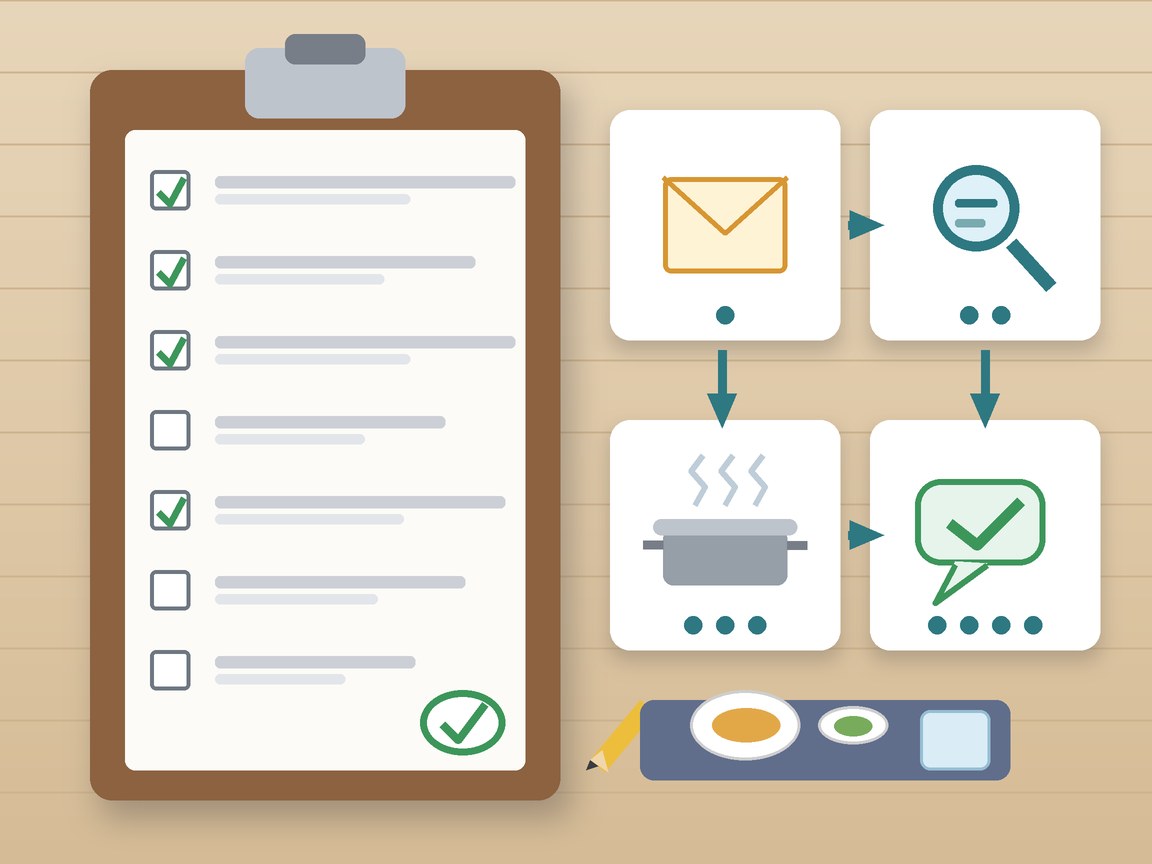
We suggest the same sequence for every case: receive, record, acknowledge, classify, find the cause, fix, report back and follow up. When everyone knows the sequence, nothing slips through, and HR and the provider discuss the same facts. (general guidance)
- Receive and record at once: note the details on the form; do not wait for complete information before you start helping.
- Acknowledge the reporter: say the case is received, who owns it and when they will hear back, within the agreed time.
- Classify the level: routine, significant or urgent food-safety.
- Fix the immediate problem: replace or refill the food, or clean up straight away where possible.
- Find and fix the root cause: check the recipe, timing, equipment or working routine.
- Report back and follow up: inform the reporter, check the problem does not return, then close the case.
What should a food complaint record form include?
It should answer what happened, where, when, who owns it and how it was fixed. A short form that people fill in beats a long one nobody uses. (general guidance)
| Field | What it is for |
|---|---|
| Date, time and work shift | Shows whether a problem repeats in the same shift or time slot |
| Serving point and menu item | Identifies which line or which dish was involved |
| Description and evidence | For example a photo or kept tableware, with the employee's consent |
| Type and urgency level | Routes the case to the right people |
| Owner and follow-up date | Gives every case an owner and a re-check date |
| Immediate fix and root cause | Kept for monthly trend analysis |
| Reply sent and status | Confirms the reporter was answered and the case is closed |
Collect only the personal data you need and limit who can see the reporter's details, so employees feel safe to speak up.
How do you classify the urgency of a canteen complaint?
Use three levels based on the impact on employees: routine, significant and urgent food-safety. Each level should have its own decision-maker and response time. (general guidance)
| Level | Examples | What to do |
|---|---|---|
| Routine | Taste, menu preference, a condiment running out | Record, acknowledge and include in the monthly report |
| Significant | Repeated small portions, repeatedly cold food, a special-diet meal not delivered as agreed | Fix immediately, find the cause and inform managers on both sides |
| Urgent food-safety | Suspected spoiled food, a foreign object, several people feeling unwell or a severe allergic reaction | Stop serving the dish concerned, keep samples and tableware, advise anyone with symptoms to see a doctor and inform management at once |
Urgent cases should follow your organisation's procedures and the relevant laws. For prevention before problems arise, see the daily canteen food safety checklist.
How do you find the root cause so a complaint does not come back?
Keep asking why until you reach a cause you can actually fix, instead of stopping at an apology and a replacement plate. An immediate fix satisfies the person who complained, but if the cause remains, the same complaint returns. (general guidance)
- Food not hot: check the gap between finishing cooking and serving, the hot-holding equipment and whether food is refilled in small batches.
- Taste changed: check the recipe, how seasoning is measured and who cooked that shift.
- Small portions or food running out: compare actual attendance with the quantity prepared, and how the team serves.
- Long waits: look at the line layout and bottlenecks, as in our article on how to reduce canteen lunch queues.
- Repeated menus: review the menu rotation, see factory staff menu planning.
Problems limited to night shifts or small groups should not be buried by the overall picture; see shift worker meal welfare in factories.
How should you reply to and report back to employees who complain?
Reply briefly and politely, say what has been done and explain how you will follow up. Employees do not expect every suggestion to be accepted; they want to know they were heard. (general guidance)
- Thank them for reporting, and repeat the issue so they can confirm you understood.
- Say what has been fixed or is being checked, and when you will update them.
- If a request is not possible because of budget or space limits, explain the reason plainly.
For the bigger picture, post a "you said, we changed" notice on the board or in the chat group so everyone sees that feedback leads to real change, without naming the reporters.
What should HR and procurement agree with the canteen provider about complaints?
Write into the contract or tender who receives cases, how fast they reply, which levels apply and how results are reported. This lets procurement assess the provider with data rather than impressions. (general guidance)
- A shared reporting channel and named contacts on both sides.
- Agreed acknowledgement and resolution times for each urgency level.
- The procedure for urgent food-safety cases and who may decide to stop service.
- A monthly summary: number of cases, types, causes and status of fixes.
- Joint reviews of repeat cases, with an action plan that has an owner and a deadline.
For tender items, see the canteen management outsourcing guide for HR and procurement. If the same problems persist after several joint reviews, see the checklist for switching canteen provider.
How does TJ FAVOR GROUP help with organisational canteens?
From the company's website:
- Based in Bangkok, with more than seven years of restaurant experience.
- Canteen management for factories, offices and schools, so organisations can focus on their core business.
- Event catering comes with plates, cutlery and dining equipment, no extra service charge, and bookings need only two days' notice.
The website does not describe the company's complaint procedure in detail. To learn which reporting and review process suits your organisation, ask the team directly. Company details are on our English home page.
Frequently asked questions about canteen complaint handling
How quickly should canteen complaints be answered?
There is no single standard for every organisation. Agree it in writing with your provider: routine cases acknowledged promptly, and urgent food-safety cases handled immediately.
Do we need software to handle canteen complaints?
Not necessarily. Small organisations can start with an online form and a log sheet. What matters is a named owner and following each case through to closure. Consider tools once the volume grows.
How should we handle employees saying the food tastes bad?
Ask which dish, which shift and what was wrong, then compare with the recipe and cooking method. If several people say the same thing, treat it as a signal to fix, not as personal taste.
Should we accept anonymous complaints?
Yes, because it helps employees speak up, but check the facts from several angles and do not judge a provider on a single report.
What should we do if food is suspected of making employees ill?
Make sure those affected receive care and see a doctor, stop serving the dish concerned, keep samples and tableware, inform management and the provider at once, and follow your organisation's procedures and the relevant laws.
Talk to TJ FAVOR GROUP about your canteen and complaint handling
If you want clear, structured canteen complaint handling, send us your headcount, shift pattern and the problems you see. Our team will be glad to advise and prepare a quote that fits your organisation.
- LINE: @tjfavor (with the @)
- Phone: 063-878-8169 / 087-746-0044 / 096-949-6622
- Website: tjfavor.com
See our canteen management service, our English home page or contact the team.