Employee Meal Benefit Options: Canteen, In-House Cook, Lunch Boxes or Allowance?
Key takeaways
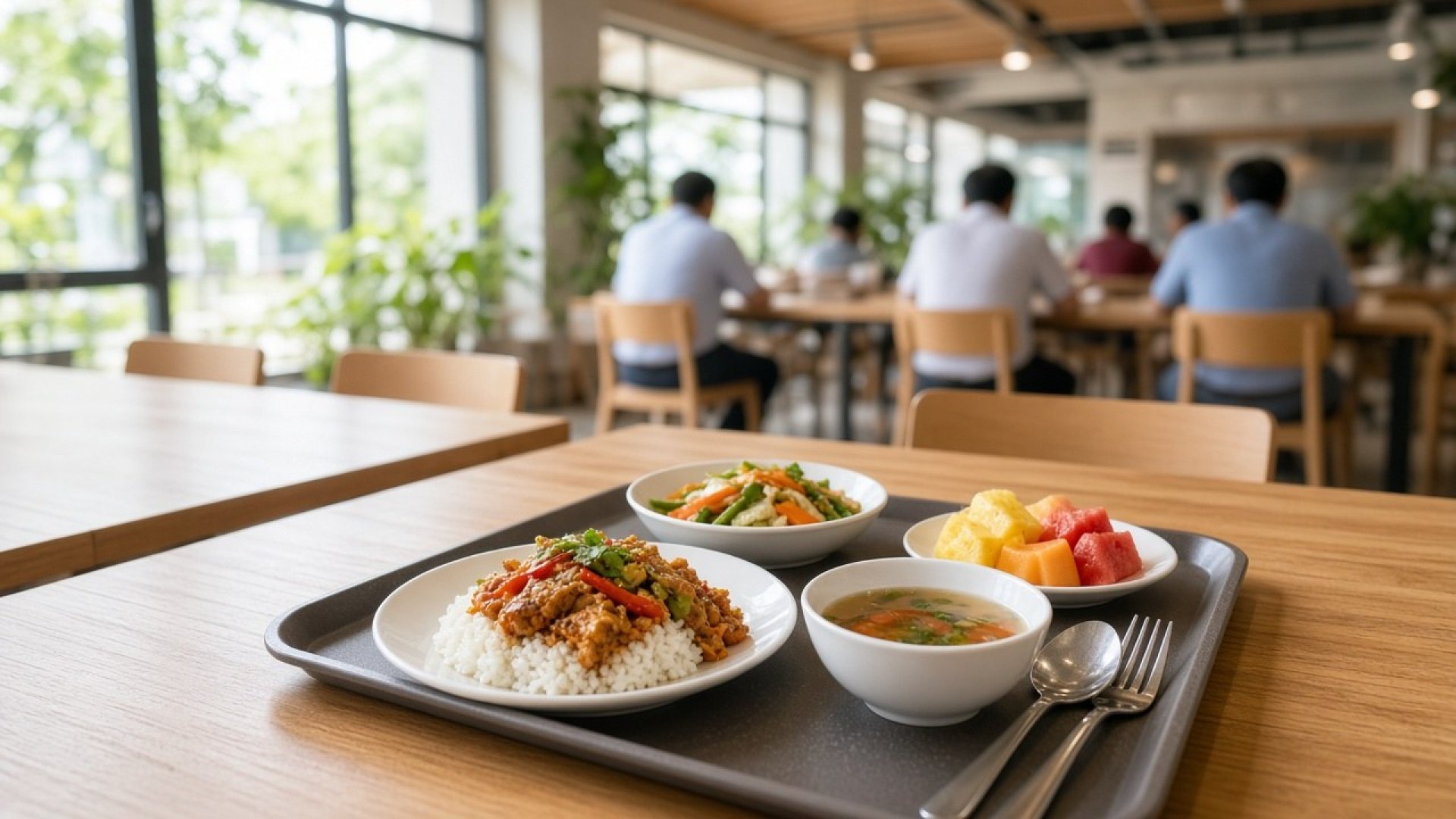
- An employee meal benefit is more than a canteen. Companies can choose an outsourced canteen operator, an in-house cook, catered lunch boxes, a cash meal allowance or meal coupons used in the canteen.
- The right model depends on headcount, shift patterns, kitchen space, budget and how much time HR or facilities can give to running it.
- This guide includes a comparison table, decision questions and steps to start or switch your staff meal programme, written for HR, procurement, facility managers and business owners.
When a company starts planning an employee meal benefit, HR and owners usually face the same question: open a canteen, hire a cook, order lunch boxes to the office, or simply pay a meal allowance? Each option has different strengths and different work behind the scenes. Choosing out of habit, or only by the cost of one meal, can leave you with a benefit staff rarely use, or one that eats into HR's time every day. This guide compares the options plainly and shows how to choose the one that fits your organisation.
What types of employee meal benefit are there?
Companies in Thailand commonly use five models: an outsourced canteen operator, an in-house cook in the company kitchen, catered lunch boxes, a cash meal allowance, and coupons or prepaid credit used in the canteen. Many combine them, for example a canteen for the day shift and lunch boxes for the night shift or smaller branches.
| Model | Suits | Strengths | Watch out for |
|---|---|---|---|
| Outsourced canteen operator | Factories and offices with many staff or shift work | A team handles menus, ingredients, cleaning and kitchen staff for you | Needs kitchen or canteen space and a clear scope of work |
| In-house cook | Small offices or factories that already have a kitchen | Fully flexible menus and a personal touch | You manage employment, leave cover, purchasing and hygiene yourself |
| Catered lunch boxes | Offices without a kitchen, small teams or night shifts | Quick to start, no kitchen space needed | Delivery timing, menu variety and packaging waste |
| Cash meal allowance | Workplaces with plenty of food outlets nearby | Simple to run, staff choose freely | Does not save break time and tax treatment should be checked with an accountant |
| Coupons or prepaid canteen credit | Companies with a canteen that want to subsidise part of the cost | Clear budget control, spent only on food | Needs a coupon or payment system that can be audited |
Which model suits which kind of organisation?
Outsourced canteen operator
Suited to organisations feeding many staff every day, especially multi-shift factories. The operator takes care of menus, ingredients, kitchen staff, cleaning and day-to-day issues, while you set the scope, check quality and listen to employee feedback. If you are unsure how to choose one, read how to choose a canteen caterer.
In-house cook
Suits small companies with a ready kitchen and someone to manage the back office. Staff get familiar home-style cooking, but every task stays with you: hiring, covering leave, buying ingredients, keeping records and keeping the kitchen clean.
Catered lunch boxes
Good for offices without a kitchen, or as an addition to a canteen for night shifts, field teams and meetings. Be clear about delivery times, special diet labels and how food is held before eating. See our office lunch box ordering guide.
Cash allowance or meal coupons
Cash is easy to administer but gives you little say over what staff actually eat. Coupons or prepaid canteen credit make sure the benefit is spent on food and are easier to reconcile, especially with a cashless system.
In-house cook or outsourced canteen operator: what is the difference?
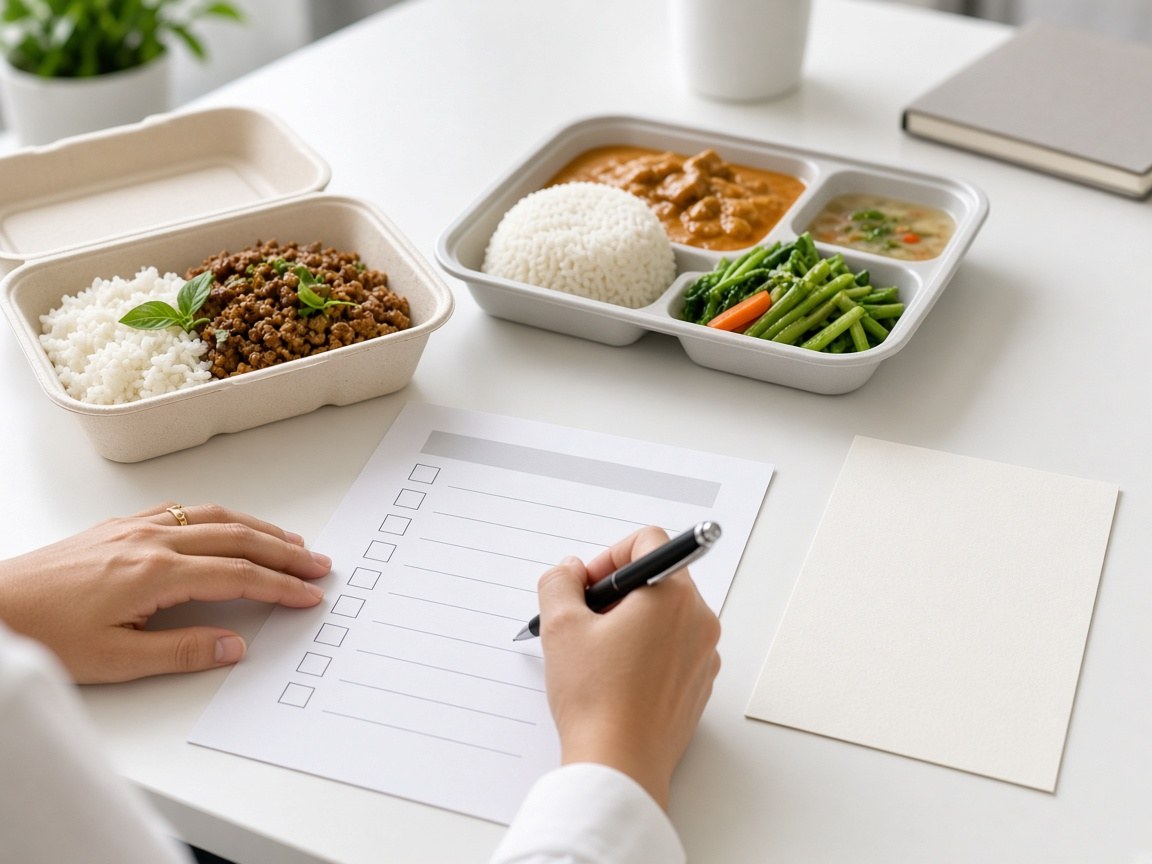
The main difference is who carries the background work. With an in-house cook, your company manages people, ingredients and hygiene. With an operator, those tasks sit inside the contractor's scope of work. The table shows where each task lands.
| Task | In-house cook | Outsourced operator |
|---|---|---|
| Recruiting kitchen staff | Your company | The operator |
| Cover for leave or resignations | Your company | The operator |
| Buying ingredients and controlling cost | You check every bill | Within the operator's scope |
| Rotating menu planning | Depends on the cook | Operator proposes, you approve |
| Kitchen cleaning and hygiene | You supervise | Checklists and named responsibility |
| Equipment and tableware | You buy and maintain | Agreed in the contract |
Where HR is stretched, moving the background work to an operator usually frees the team for people work. If headcount is small and you have a trusted cook, an in-house kitchen can still be the right choice.
How to choose an employee meal benefit: six questions to answer first
- How many staff, and how many shifts? Plan what night-shift workers will eat. See meal welfare for factory shift workers.
- Do you have a kitchen or canteen space? If not, start with lunch boxes or follow our new staff canteen opening guide.
- Will the company pay the full cost or a share? This decides between fully paid meals, coupons or staff co-payment.
- How varied are dietary needs? For example halal or vegetarian; read halal, vegetarian and special diets in the staff canteen.
- Are there enough food outlets nearby? If the site is far from shops, a cash allowance helps staff less than you might expect.
- Who will own this internally? If nobody has the time, choose a model where a contractor handles daily operations.
Staff meal costs: what about accounting and tax?
How staff meal costs are recorded and taxed depends on the model, for example paying a contractor against invoices or paying cash to employees, so check with your accountant or the Revenue Department before setting a policy. What HR can do right away is keep complete records: contracts, invoices, receipts and meal count reports.
Steps to start or switch your meal benefit
- Ask employees first what they want and what problems they face. See sample questions in our employee canteen satisfaction survey.
- Set the budget per person per meal and how cost is shared between company and staff, using our canteen cost per head guide.
- Write the scope and selection criteria if hiring a provider; see preparing a canteen outsourcing RFP.
- Run a short pilot and collect feedback, usage numbers and complaints.
- Adjust menus, opening hours or the model itself, then communicate the changes to everyone.
Frequently asked questions about employee meal benefits
Does the law require companies to provide staff meals?
In general, meals are a benefit employers choose to offer. If they are written into employment contracts or work rules, the company should follow what was agreed. If unsure, consult a labour law specialist.
What is the Thai term for staff meals?
Staff meals are usually called อาหารพนักงาน, and the meal benefit is สวัสดิการอาหารพนักงาน. A cash meal allowance is often called ค่าอาหาร.
Which model should a small company start with?
Without a kitchen, lunch boxes or coupons with nearby food shops are quick to start. As headcount grows, consider a canteen or a regular contractor.
Can we hire a cook by the day to make staff lunches?
Yes, but you then manage employment, ingredients and kitchen hygiene yourself, and you need a backup plan for days the cook cannot come.
What meal benefit services does TJ FAVOR GROUP provide?
TJ FAVOR GROUP provides canteen management, monthly staff meals and corporate catering, with no extra service charge and tableware and equipment provided. Our team can help you assess which model fits your staff.
How do I contact TJ FAVOR GROUP?
Call 063-878-8169 / 087-746-0044 / 096-949-6622 or message LINE @tjfavor, or see our contact page.
Talk to TJ FAVOR GROUP about your employee meal benefit
TJ FAVOR GROUP is a Bangkok canteen management and catering company with more than seven years of experience in canteens and monthly staff meals, no extra service charge and a twenty-four-hour hotline. If you are starting or reviewing your employee meal benefit, our team is ready to listen and help you compare the options.
- LINE: Chat with TJ FAVOR on LINE (@tjfavor)
- Phone: 063-878-8169 / 087-746-0044 / 096-949-6622
- Website: tjfavor.com
Learn more on our About us page or contact the team.


