Corporate Canteen Management Guide for HR & Procurement
Corporate Canteen Management Guide: How Procurement and HR Can Drive Cost Efficiency and Employee Satisfaction
In Thailand’s highly competitive corporate landscape, retaining top talent while optimizing operational costs is a continuous balancing act. For many organizations, the company canteen or factory cafeteria is often overlooked. Yet, it serves as one of the most vital daily touchpoints affecting employee productivity, morale, and overall well-being.
For HR professionals and Procurement teams, managing a workplace dining facility comes with its own set of unique operational hurdles. Balancing tight budgets while keeping food quality high and complaints low is no easy task.
This article explores modern canteen management strategies tailored for Thai enterprises, showing how Procurement can minimize leakages and how HR can turn daily meals into a powerful tool for employee engagement.
Key Canteen Pain Points for HR and Procurement
To build a better corporate cafeteria, management must first address the recurring challenges faced by administrative departments:
For Procurement Teams: Difficulty in forecasting actual meal consumption, manual auditing of paper food coupons, financial leakages, and lack of tangible data to evaluate catering vendor KPIs.
For HR & Admin Teams: Managing endless employee complaints regarding repetitive menus, poor hygiene, and long queues during peak hours that eat into designated break times.
For Employees: Slow transaction speeds, lack of healthy options, and outdated payment methods.
Strategic Solutions for Modern Canteen Management in Thailand
Transforming your workplace canteen from a basic amenity into a strategic corporate asset requires aligning Procurement’s fiscal control with HR’s people-first approach. Here are three actionable strategies to achieve this:
1. Transition to a Cashless & E-Coupon System
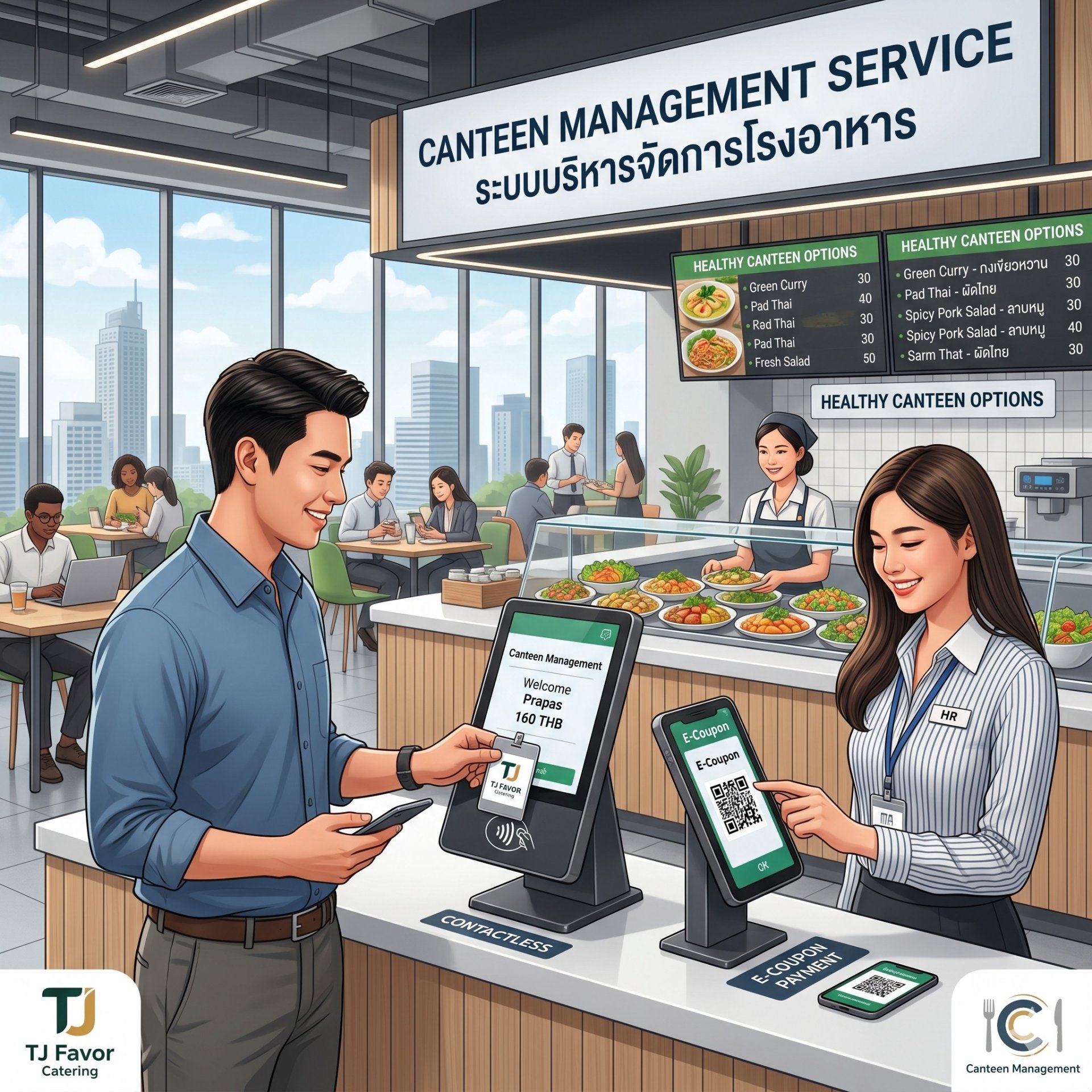
Phasing out cash and paper tokens in favor of an automated Canteen Management System integrated with employee RFID badges or mobile QR codes offers immediate benefits:
Procurement Audit Clarity: Real-time data tracking eliminates fraudulent coupon usage and gives full visibility into actual daily transactions. This helps reduce sub-optimal budget spending by 20% to 30%.
Flexible HR Benefit Allocation: HR can easily customize meal subsidies based on specific employee tiers, departments, or factory shifts (e.g., providing extra subsidies for night shifts) via a centralized dashboard.
2. Leverage Data-Driven Vendor Management
Instead of relying on anecdotal complaints to evaluate food providers, introduce digital feedback loops. Implementing quick-tap rating kiosks or mobile feedback channels allows HR to collect structured data. Procurement can then use these monthly satisfaction scores as objective metrics for vendor contract renewals and quality enforcement.
3. Integrate the "Healthy Canteen" Concept into Wellness Programs
Workplace wellness is a major driver of employee engagement in Thailand today. Offering subsidized healthy meal paths (e.g., low-sodium, balanced macronutrients, or clean food alternatives) directly curbs chronic workplace fatigue and afternoon sluggishness. Over time, promoting nutritional health in the cafeteria helps lower healthcare claims and reduces absenteeism.
Line @tjfavor
Tel 0877460044 / 0850991092